
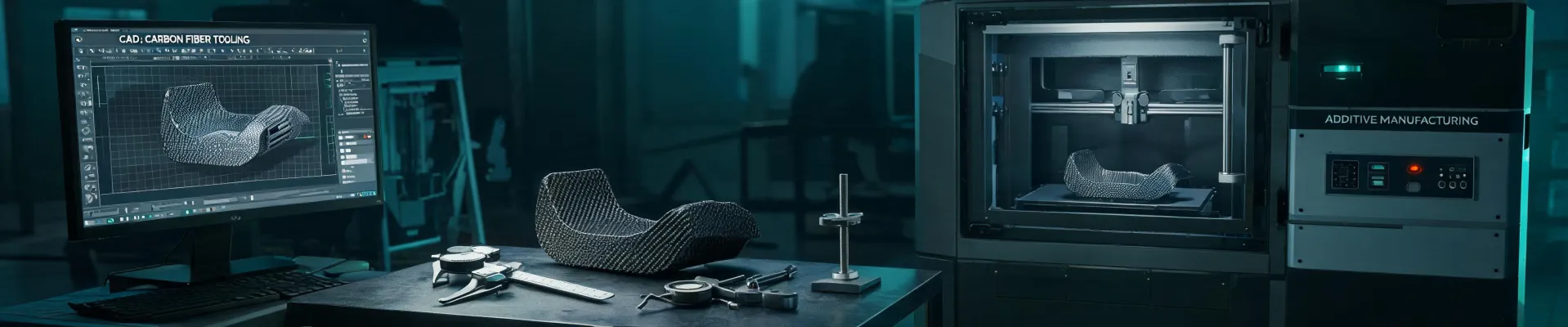
I'm going to say something that gets me sideways looks in procurement meetings: the lowest quote is not the goal. It never was. The goal is the lowest total cost that gets the part delivered, working, and delivered on time. Searching for "industrial carbon fiber 3d printer price 2025" is a useful starting point, but it's the wrong place to stop.
I say this as a procurement manager at a 140-person medical device manufacturer. I manage about $1.8M a year in custom manufacturing. Over the last six years, I've watched every dollar cross my desk—around $10M across more than 900 purchase orders. I didn't start with this opinion. I learned it by paying for my own assumptions.
Everything I'd read about procurement said get three quotes and pick the lowest. My experience with 200+ orders over six years says relationship consistency often beats marginal cost savings.
Three things explain why.
Argument 1: The lowest quote has a second page
In Q2 2024, we needed a machined aluminum bracket. First vendor quoted $4,800, all-in. Second vendor quoted $3,900. I almost approved the second one until I read the full quote line by line. Setup fee, inspection report, freight. Total: $5,180. That's a $380 difference hidden in fine print.
The quoted price is a headline. Total cost of ownership includes setup, shipping, expediting, inspection, and the cost of a missed deadline. An "estimated delivery" is not a promise. When a production line is waiting, a late bracket has a cost that never appears on the invoice. A hidden fee. A missed milestone. A rework. That's the real price.
Argument 2: Search terms are not specifications
Last week my sister asked me what is co2 fractional laser treatment. I didn't know. I searched it, got skincare articles. It reminded me how easy it is to search a phrase and feel informed without actually understanding the underlying technology. Manufacturing search queries work the same way.
3d printer resin reviews will tell you which test cube looks shiny. They rarely tell you whether a part can survive 80°C, resist solvents, or hold a tolerance after post-curing. Resin reviews are useful for prototypes. Production-grade parts, especially carbon fiber 3D printing, are a different conversation.
Many carbon 3d printers advertised as "carbon fiber" use chopped fiber reinforcement. That's not the same as continuous carbon fiber printing. When a vendor says "industrial carbon fiber 3d printer price 2025," they usually mean a list price for a machine. The actual cost per part depends on build volume, fiber orientation, post-processing, and utilization. Based on public list prices I checked in January 2025, industrial carbon fiber 3D printers range from roughly $50,000 to $250,000. That range tells you nothing about whether a specific part is affordable. A $150,000 machine that runs 20 hours a week is wildly more expensive than a $180,000 machine running 120 hours a week.
Same with large cnc machining factory. I've walked into a 100,000-square-foot facility with less quality discipline than a 20-person shop. Capacity isn't capability. Size doesn't tell you if the machinist checks critical dimensions or if the QC team has traceability.
And for any laser-related searches: CO2 lasers are used in manufacturing for cutting and welding. Fractional laser treatment is a medical procedure. If you're searching what is co2 fractional laser treatment, you're in the wrong factory article. But the bigger point is the same—know what the words actually mean before you ask for a quote.
Argument 3: One hand can hold the tolerances
Multi-process capability sounds like a marketing phrase. In practice, it's a risk reducer. When a part needs carbon fiber 3D printing and CNC machining, sending the design data to two different suppliers means negotiating tolerance breaks, surface treatments, and shipping schedules. If the printed piece comes out 0.2mm too thick, the CNC shop blames the 3D printer, the 3D printer blames the file, and you're stuck in the middle.
I've used carbon-3d for mixed-material runs because their engineering team reviews the file for both processes in one pass. That didn't feel like a premium feature until a supplier handoff cost us a week on a prototype. A week of engineering time is a real cost, even if it doesn't appear on a quote.
Same logic applies to laser cutting and injection molding. The more handoffs, the more hidden costs.
What if the price gap is real?
I know what you're thinking: sometimes the low quote is just low. No hidden fees. No sloppy work. I've seen that too. But I still don't approve it without a cost model.
If a lower quote is 30% below the others, it's a reason to inspect more, not less. Ask for a capability statement. Ask for tolerances. Ask who pays for rework if a dimension is out of spec. If the vendor has made the same part before and their quality records are solid, then a price gap is something to respect. If they're guessing, the quote is just a guess with a number.
The two-hour decision
Had two hours to approve a rush order once. Normally I'd wait for three quotes. The customer's line was down, and every idle minute was burning money. I approved our usual vendor based on years of trust. Then I second-guessed myself until the part arrived in 18 hours, passed incoming inspection, and went straight to the assembly line.
Did I leave money on the table? Maybe. But the cost of a failed delivery would have been several times the difference. The relationship was the insurance.
Not ideal, but workable. Procurement is often about imperfect decisions with limited information.
The only number that matters
Next time you search carbon 3d printers or industrial carbon fiber 3d printer price 2025, ask a different question: what is the total cost of getting this part right—including rework, delay, inspection, and trust? Because the lowest quote does not guarantee the lowest cost. The right vendor does.
That's not a pitch for premium pricing. It's a case for looking at the whole picture. The vendor that charges more on paper can still be the cheapest when every risk is priced in. And the vendor with the smallest number in their email signature can turn into the most expensive lesson of the quarter.
I'll keep building my TCO spreadsheet. Vendor relationships, verified capabilities, and honest communication have a dollar value. I just can't find it in the list price.