
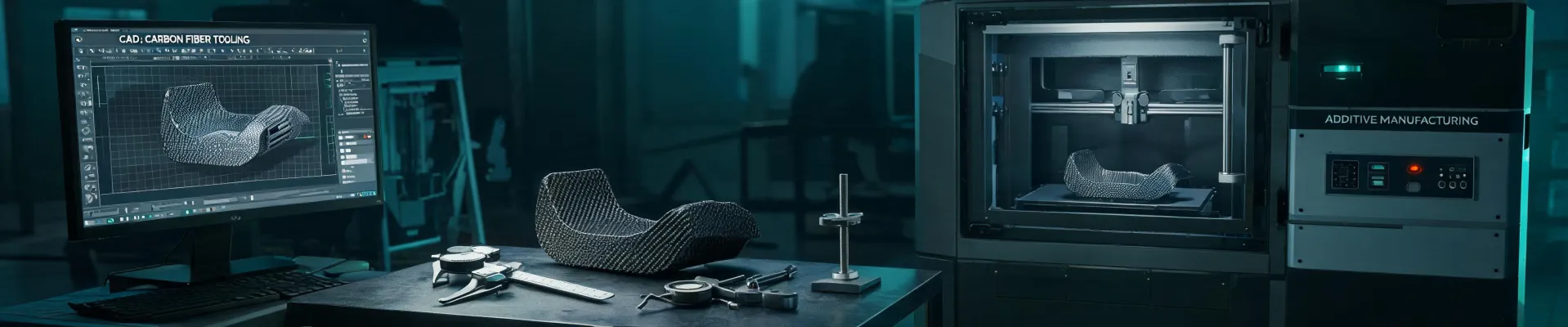
When a client calls at 3 PM and needs parts on a truck by Friday, you learn quickly that rush orders are about judgment more than speed. Fast decisions with incomplete information, corrected as new facts land. That's the job.
I coordinate emergency production across 3D printing, CNC machining, and laser cutting for B2B clients. Last quarter alone, we processed 47 rush orders with a 95% on-time rate. Not perfect—those four late orders cost us real money, and one of them cost us a client. This checklist is what survived all of it.
It's for engineers, buyers, and project managers who need parts faster than normal lead times allow. Six steps, in order. Each one has a clear output. If you follow the process and the timeline still doesn't close, at least you'll know exactly where the problem is.
Step 1: Question the Deadline
Before anything else, verify that the deadline is a real deadline. I've had clients call in full panic about same-day delivery and, after two questions, discover the "hard date" was flexible by a day or two. Not because they lied—because no one had asked.
Ask these three:
- What actually happens if the part arrives late?
- Is the date tied to an external event (flight test, trade show, production line stop)?
- Who set the deadline—engineering or sales?
Salespeople set aggressive deadlines to win orders. Engineers set realistic ones based on constraints. If the salesperson set the date, push back. Worst case, nothing changes and you've lost two minutes.
Real example: In March 2024, a client called at 3:45 PM, needing carbon fiber 3D printed brackets for a prototype vehicle test the next morning at 8 AM. Normal lead time: four days. I asked if the test time was fixed. It could slide to 2 PM. That six-hour shift meant we could use a proven print profile instead of gambling on a rushed one. The brackets shipped overnight; the test ran at 1:45 PM.
Worth asking the question. Always.
Step 2: Match the Process to the Time Available
The first filter is time. How many hours you have determines which process will work.
- FDM 3D printing with carbon fiber filament—no tooling, fast setup, ideal inside 48 hours. Good for fixtures, jigs, and prototype brackets. If the filament is dry and the printer isn't already running, you can have parts in hours.
- CNC machining—for parts that need tighter tolerances or different materials than plastic composites can offer. Setup takes time (fixturing, tool selection, CAM), but cycle times are short. A CNC milling machine parts supplier with material in stock can realistically deliver in 48 hours.
- Laser cutting—fastest option for sheet metal or flat sheet materials. Give a shop a clean DXF in the morning, get parts in the afternoon. Whether they run an Omtech 100W CO2 laser for acrylic or wood, or a fiber laser for steel, the bottleneck isn't the machine. It's the file and the material stock.
- Injection molding—not an option on a rush order unless the mold already exists. Don't waste time on quotes.
The mistake I see most often: teams choose the process first, then look for a supplier. Flip it. Call suppliers, find out what capacity they actually have in the next 24 hours, and let that drive the process decision.
If you're in aviation, there's an extra consideration. When comparing VMC vs IMC setups—vertical machining centers for flexible, low-volume work; integrated machining cells for automated, repeatable production—you need to know which one the supplier actually runs. A shop running only automated IMC cells isn't the right fit for a one-off bracket that needs to ship tomorrow. A VMC shop can accommodate the change. Match the machine type to the urgency.
The Hard Truth About Carbon Fiber 3D Printer Cost
Carbon fiber 3D printing gets a lot of hype for good reason: the stiffness-to-weight ratio for finished parts is genuinely excellent for tooling and structural brackets.
But the carbon fiber 3D printer cost conversation is where suppliers hide their game. I've seen the same part quoted at $80 and $400 from two "equivalent" vendors. The $80 quote was print time only. No filament, no support removal, no inspection, no reprint allowance.
The $400 quote covered material, post-processing, inspection, and one reprint if the first part failed. On a rush order, which is actually cheaper? The answer isn't obvious. The $80 part can still come out ahead—if it works. If it warps, the $60 reprint plus $45 overnight shipping makes it $185, and you've burned two extra days. The $400 part would have been on your desk tomorrow.
That's total cost of ownership. The lesson I learned the hard way—twice.
Step 3: Vet the Supplier's Real Capacity
A supplier's website lists what machines they own, not whether those machines are available. When I'm triaging a rush job, I ask exactly five questions:
- Do you have machine time available today or tomorrow?
- Is the material in stock, or does it need to be ordered? If ordered, how long does that take?
- Who runs the second shift? No night shift means no overnight production.
- What was the last rush job you did in this material? I want specifics.
- If the part fails mid-production, is rework or a reprint included?
I started asking these five after a $15,000 contract went sideways. A discount vendor had the right machines but no available capacity. They planned to squeeze our job in if another client's part finished early. It didn't. We paid $800 in express fees to a second supplier who actually had an open machine.
Five questions. Two minutes on the phone. Or a $15,000 mistake.
Step 4: Calculate Total Cost, Not Unit Price
When I first started coordinating rush orders, I assumed the fastest quote was the best quote. Three budget overruns later, I realized I'd been comparing the wrong numbers.
Here's the thing I tell every procurement person who calls: unit price is the opener, not the full story. By the time a rush order wraps, you've got setup fees, material surcharges, upgraded shipping, revision charges, and the quiet cost of your own team chasing status updates. The real equation is:
Total cost = unit price + setup + shipping + rework risk + schedule risk
Concrete example: we compared a $500 quote and a $650 quote for the same batch of CNC parts. The $500 vendor hadn't run a rush order in months. The $650 vendor had delivered three for us that year. Client deadline meant we had roughly two hours to decide—well, about 90 minutes, since the client kept calling with updates. We went with $500.
That $500 quote became $800 after shipping, setup, and a revision fee when the first batch missed tolerance. The $650 all-in quote was the cheaper one. Not a hypothetical. A price list.
Now I calculate TCO on every comparison. Rush or not.
Step 5: Get Everything in Writing
Verbal agreements feel like they save time. They don't.
A supplier once agreed to "same-day turnaround" over the phone. The next morning they clarified they meant same-day start, not same-day delivery. That single ambiguity cost us a full day and nearly blew our client's schedule.
Before you commit, you need written confirmation of:
- Delivery date and time (with timezone)
- What the price includes (material, setup, post-processing, inspection)
- What happens if the part fails inspection
- How a revision request changes the timeline
- Who owns shipping cost if the part is late
A confirmation email takes five minutes. One missed deadline because of vague wording will cost more than that email ever will.
Step 6: Build a Buffer You Never Mention
This is the step that saves the entire order, and it's the one almost nobody does. It's also the least fun to sell internally, because it sounds like you're being slow.
For every rush job, reserve 15–20% of the remaining time as a rework buffer. Need it in 72 hours? Plan to be done in 60. Need it in 24? Aim for 19.
Three concrete moves:
- Run one extra part. A single extra unit costs a fraction of a second rush order. If everything comes out good, you have a spare. If something fails, you've already absorbed the hit.
- Name a backup supplier before you need them. One call before a deadline is free. One call after the deadline is not.
- Include a reprint allowance in the quote. Warping and delamination happen with 3D printer filament with carbon fiber more often than the filament vendors admit. Paying for reprint capacity upfront is much cheaper than negotiating it after a failure.
And never tell the client about the buffer. The moment they know it exists, it becomes the deadline. The buffer belongs to you—and you will need it.
A note on shipping: not everything needs to move by air freight. For small, non-critical pieces within a larger rush order, USPS First-Class Mail is surprisingly effective. Per USPS rates effective January 2025 (usps.com/stamps), a large envelope starts at $1.50 for the first ounce, plus $0.28 for each additional ounce. A 6-ounce spare bracket ships for around $2.90. Spend the courier budget on the parts that genuinely need to be there by Friday.
Common Mistakes in Rush Orders
These patterns cost people money. Every single one.
1. Shipping the part before checking traceability. In aviation, a part without documentation doesn't exist. Per AS9100—the aerospace quality management standard—traceability and inspection records must be maintained as part of production, not generated after the fact. Whether comparing VMC vs IMC processes or 3D printing vs CNC, confirm the paperwork is in the quote.
2. Forgetting material conditioning time. Carbon fiber reinforced nylon and PETG absorb moisture from the air. Printing with wet filament gives weak, cloudy parts. If your supplier needs to order the filament, add 24–48 hours for drying. This hidden lead time has derailed more than one "urgent" order.
3. Sending messy files and expecting magic. Wrong units, missing tolerances, a PDF "converted" to STL with no internal geometry. Check the file before you send it. Ask the supplier to confirm it's manufacturable. If they say "we'll figure it out," you're hearing "we'll bill you for it."
4. Confusing responsiveness with capability. The vendor who answers the phone at 10 PM isn't necessarily the vendor who delivers on Friday. Ask for a recent client reference on rush work or a shop-floor photo. It's not about trust. It's about verification.
5. Not defining what "done" means. Does done mean the part is off the machine, or finished, inspected, documented, and packed? The difference changes the timeline by days, not hours. Define it in the confirmation email from Step 5.
Rush orders aren't a test of heroics. They're a test of process. The teams that succeed aren't the ones that panic fastest—they're the ones with a checklist that catches expensive mistakes before they reach the invoice.
If you're facing a deadline that feels impossible, run these six steps before you call anyone. And when you need a supplier who's built for exactly this kind of work, that's what we do at carbon-3d: 3D printing, CNC machining, laser cutting, and injection molding under one roof, with carbon fiber filaments in stock and ready. No hidden setup fees, no inflated timelines. We tell you the real schedule, and we hit it.