
-
What is a 3D printer that can print carbon fiber, and do I actually need one?
-
Is an Elegoo Centauri Carbon 3D printer review 2025 useful for production work?
-
Where can I read 3D printing with Fusion 360 online?
-
What does VMC stand for? Is VMC a drink?
-
H7 vs H8 reamer: which one should I use?
-
How do I avoid emergency rework on a rush order?
-
Can Carbon-3D handle a same-day carbon fiber 3D print or CNC job?
-
What should I check before approving a carbon fiber part for production?
If you are searching for a carbon-3d answer before a deadline, you are probably juggling a few different questions at once: desktop carbon fiber printers, Fusion 360 tutorials, VMC definitions, and reamer tolerances. I coordinate rush orders at Carbon-3D, a custom manufacturing shop. I have handled 200+ rush jobs in 7 years, including same-day turnarounds for automotive and industrial clients. Here are the answers I give most often.
What is a 3D printer that can print carbon fiber, and do I actually need one?
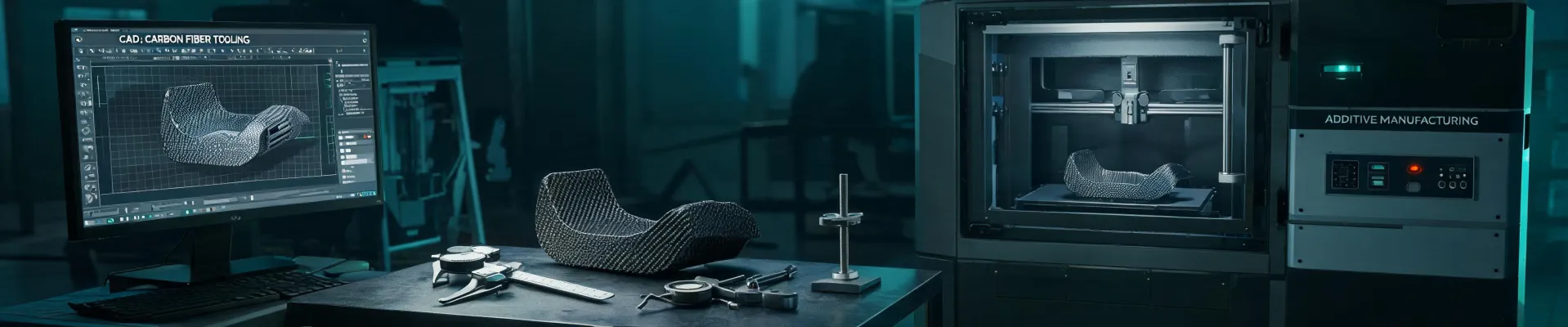
A 3d printer that can print carbon fiber is not just a normal FDM machine with a fancy spool. You need a hardened nozzle, because carbon fiber is abrasive. You usually need an enclosed chamber and decent temperature control to keep warping under control. And the material matters: many carbon fiber filaments are chopped fiber, which adds stiffness but is not the same as continuous carbon fiber. For jigs, fixtures, and non-critical covers, chopped fiber can be fine. For structural brackets or end-use parts under load, you need to look at continuous fiber or a different process entirely. At Carbon-3D, we run industrial carbon fiber 3D printing for production parts, so we care about layer orientation, fiber direction, and repeatability. Honestly, if you are printing one bracket for a prototype, a desktop machine might be enough. If you are quoting a client job, test coupons first.
Is an Elegoo Centauri Carbon 3D printer review 2025 useful for production work?
I cannot give you a hands-on review of the Elegoo Centauri Carbon from our shop, because we do not run that machine in production. To be fair, 2025 reviews can be useful if you are comparing desktop printers for hobby or prosumer use. They will show you setup, speed, print quality, and community support. But production work is a different animal. You need to know whether the printer holds tolerance across a hundred parts, whether the material supplier provides datasheets, and whether you can trace a failed print back to a batch. A good review might tell you the machine is pretty capable. It rarely tells you how it behaves when a client moves a deadline up by 24 hours. If you are searching for elegoo centauri carbon 3d printer review 2025, use it as one data point. Then ask what happens when the part has to fit a CNC-machined fixture.
Where can I read 3D printing with Fusion 360 online?
If you want to read 3d printing with fusion 360 online, start with Autodesk's own learning resources. Fusion 360 has additive manufacturing tools for orientation, supports, and toolpaths, and the official documentation is more reliable than random forum posts. Autodesk also offers tutorials through its design and manufacturing learning paths. For carbon fiber, do not stop at the CAD tutorial. You need the printer manufacturer's profile and the material datasheet. I have seen people spend hours making a beautiful Fusion 360 setup, then fail because they used a generic PLA profile on a carbon fiber nylon. That is a five-minute check that saves a five-day rework. Plus, if you are sending the file to a shop like Carbon-3D, export a STEP file and include tolerances in the notes. A pretty model without tolerance callouts is basically a suggestion, not a manufacturing drawing.
What does VMC stand for? Is VMC a drink?
In manufacturing, VMC stands for Vertical Machining Center. If you searched for vmc stands for drink, you probably landed on cocktail menus or beverage brands instead. In a machine shop, a VMC is a CNC mill with a vertical spindle. It holds the tool in a spindle that moves up and down, while the table moves the part. We use VMCs for drilling, tapping, pocketing, and reaming holes. They are workhorses for fixtures and metal parts. When a VMC goes down during a rush order, the whole schedule gets tight. I have seen a 20-minute spindle warm-up issue turn into a 6-hour delay because nobody checked the tool offsets. So no, VMC is not a drink. But if your VMC is down and you are behind on a deadline, a drink might sound appealing. Bottom line: VMC equals Vertical Machining Center, and it is usually the first machine a shop checks when a metal part is late.
H7 vs H8 reamer: which one should I use?
For h7 vs h8 reamer selection, use H7 when you need a tighter hole. Use H8 when you need a slightly looser fit. The difference is the tolerance class, not the reamer brand. According to ISO 286-2, for a nominal size of 18 to 30 mm, an H7 hole has a tolerance of +0 to +0.021 mm, while an H8 hole is +0 to +0.033 mm. That 12-micron difference does not sound like much, but it can decide whether a dowel pin slips in by hand or needs a press. I assumed H7 and H8 reamers were interchangeable for a fixture dowel pin. Did not verify. Turned out the H8 hole had enough clearance that the fixture shifted under load, and we had to sleeve it. Looking back, I should have checked the fit callout before the VMC operator ran the cycle. For a reamed hole, match the reamer to the drawing. If the drawing says H7, do not grab the H8 because it is sharper. If it says H8, do not force an H7 and expect the pin to fit without reaming again.
How do I avoid emergency rework on a rush order?
Prevention over cure is the cheapest tool in the shop. Five minutes of verification beats five days of correction. Before a rush job goes to the machine, I check the drawing revision, material cert, tolerance callouts, and the fixture setup. It sounds boring. It saves money. The numbers said go with a lower-cost vendor for one rush batch of carbon fiber brackets. My gut said stick with the shop that had answered every technical question. We went with my gut. Later, we learned the cheaper vendor had changed its fiber supplier without telling anyone. Granted, that decision cost a little more upfront. But it saved us from reworking 40 parts that would not pass inspection. Most rush failures I see are not machine failures. They are assumption failures. So build a checklist, and actually use it. At Carbon-3D, we would rather ask three annoying questions than explain a missed delivery.
Can Carbon-3D handle a same-day carbon fiber 3D print or CNC job?
Sometimes. It depends on the part, the material, and the hour. A same-day plastic print with a standard filament is usually possible if the file is clean and the machine is open. A carbon fiber part with tight tolerances is harder, because the material may need drying, the print may need annealing, and the fixture may need CNC finishing. If you send a STEP file, a 2D drawing with tolerances, the material callout, and your real deadline, we can triage it. I have handled rush orders ranging from $500 to $15,000, and the ones that go well are the ones where the client tells us the worst-case consequence. Missing a trade show demo is different from missing a production line startup. We do not promise 100% defect-free production for every rush job. Nobody honest can. But we can tell you fast whether the timeline is realistic. In March 2024, a client called at 4 p.m. needing a carbon fiber fixture for a line change 36 hours later. We found a slot, paid extra for courier, and delivered. The alternative was a line shutdown. That is the kind of call where a checklist and a straight answer matter more than a sales pitch.
What should I check before approving a carbon fiber part for production?
Check the fiber type, resin system, and print orientation first. Chopped fiber and continuous fiber behave differently under load. Then check the drawing: critical dimensions, datum surfaces, and whether the hole is reamed or drilled. If the part mates with a machined component, confirm the fit class. An H7 reamed hole and an H8 reamed hole are not interchangeable just because they use the same nominal drill size. Also ask for a first-article inspection plan. If the part is cosmetic, check surface finish expectations. If it is structural, ask for test data or at least a coupon test. I learned never to assume that the proof represents the final production part after receiving a batch that looked nothing like the approved sample. That was an expensive lesson in lighting, resin batch, and post-processing. So approve the process, not just the picture. A five-minute spec review is cheaper than a full batch rework.