Last January, I Almost Said No
Last January, our head of engineering walked into my office holding a broken bracket. It was a small aluminum part, maybe four inches long, used in a high-vibration assembly. The mounting hole had cracked. 'I want to try carbon fiber 3D printing,' he said. I nodded, but part of me rolled my eyes. I've been managing procurement for 6 years, overseeing a $1.2M annual budget, and I've learned to be skeptical of 'exciting' machine purchases. I assumed this was another expensive toy. That assumption cost us time, and it almost cost us a lot more.
Let me back up. I'm the procurement manager at a 40-person manufacturing company. I've negotiated with 25+ vendors, tracked every invoice, and audited our spending every year. When I audited 2023, I found that 18% of our budget overruns came from focusing on list price instead of total cost of ownership. So when an engineer asks for a printer, my job is to turn that request into a spreadsheet.
Searching for a Carbon Fiber 3D Printer for Sale
The search results for 'carbon fiber 3D printer for sale' were overwhelming. Desktop units, industrial units, open-frame, enclosed. The engineer had already bookmarked the Bambu Lab X1 Carbon combo. I read every Bambu Lab X1 Carbon combo 3D printer features list I could find. Hardened steel nozzle, enclosed heated chamber, multi-material system, carbon fiber filament profiles. For a prototype shop, that machine is genuinely useful. But it's a desktop tool. It isn't built to run 24/7 with production tolerances and full traceability.
Before the quotes arrived, I did something I usually only do for printing vendors: I made a list of every cost category that had burned us before. Setup fees, material certification, first articles, packaging, rework. I added a column for 'what the salesperson didn't mention.' That list became the skeleton of our TCO sheet.
The FS-85 additive manufacturing system was the other extreme. We got a quote for a large-format industrial system in January 2025. The base machine? $780,000. Then the line items started: installation and training, $44,000. Powder handling station, $31,000. Gas connection, $12,500. First-article validation, $8,600. (Note to self: the printer is not the cost. The printer is the beginning of the cost.)
At the same time, we also quoted press brake robots for a different product line. That was a metal enclosure program, and the robotic cells made sense only if we committed to 10,000 parts a year. We weren't there yet. But watching those numbers land on my desk helped me notice a pattern: equipment vendors love to talk about total cost in the sales deck. When the quote arrives, the line items get quieter.
There was also a moment that made me laugh. Our maintenance lead sent the group chat a question: 'Do I need to press brake when starting car?' Someone answered, 'Only if you don't want it rolling.' The exchange wasn't about manufacturing at all, but it stuck with me. It's the wrong question. The right question is: 'What condition is the car in, and what's the safest way to start it?' In procurement, asking 'do I need a press brake robot?' or 'which 3D printer is for sale?' misses the real issue. The issue is: what does this part need, and what will it cost to get that right, every time, for the next three years?
The Call That Changed My Spreadsheet
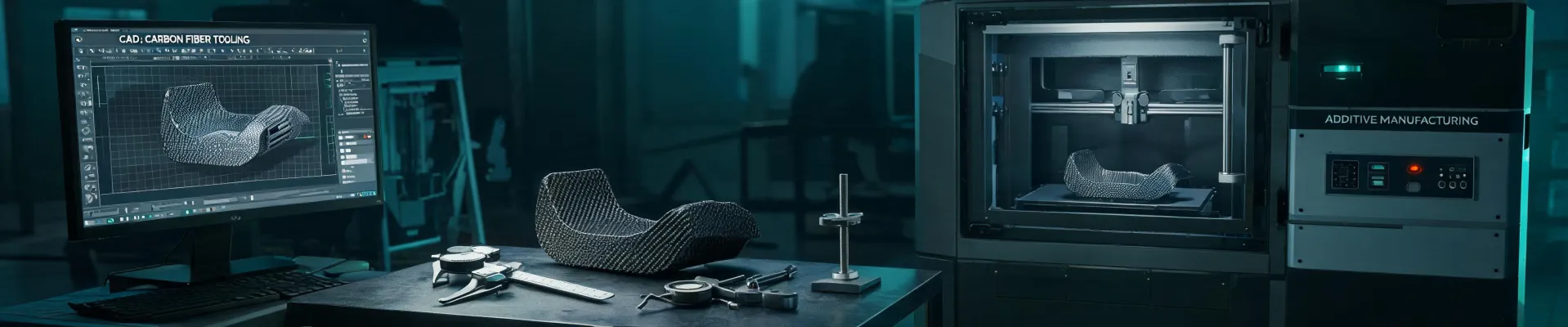
Around week three, I had a call with carbon-3d. I expected another machine vendor. Instead, the applications engineer started with our part. They asked about vibration, surface finish, annual volume, and the customer's quality expectations. Only after that did they show process options: carbon fiber 3D printing for the core, CNC machining for the mating surfaces, and injection molding if the volume grew.
That's when my initial misjudgment hit me. I had assumed additive manufacturing means 'buy a printer and feed it filament.' But the value isn't the printer. It's placing the right material and process around the part. The Bambu Lab X1 Carbon combo could make prototypes. The FS-85 system could make serious industrial parts—if we had the volume and staff to run it. We had 500 brackets in year one, maybe 2,000 by year three. Not 20,000.
It's tempting to think you can compare quotes by unit price. But identical specs from different suppliers can result in wildly different outcomes. The 'always get three quotes' advice ignores the cost of the time we spent evaluating 8 vendors over 3 months. Time is a procurement cost too.
The TCO Results
I built a total cost model from our January 2025 quotes. For the FS-85 path, I included purchase price, installation, powder handling, maintenance contract, operator training, materials, calibration parts, and a 12% reject rate for the first year. The cost per good bracket came out around $64.
carbon-3d quoted the hybrid version at $29.60 per bracket for the first 500 units. That included material, 3D printing, CNC machining, surface treatment, and a dimensional report. No setup fee line. No hidden powder handling. If the program grew to 2,000 parts, the injection molding option dropped the per-unit cost below $12.
Most buyers focus on the machine price and miss the auxiliary costs. For the FS-85, the quote didn't include the compressed air improvements our shop needed. That was a separate $7,600 estimate from a local contractor. It also didn't include the floor space reconfiguration. Small things. Not so small when they add up.
We ran the same TCO exercise for the press brake robots. The robots would have reduced labor cost per bend, but the annual volume didn't justify the programming time and tooling. That decision got easier once we separated capital cost from operating cost.
Quality Is Brand
What tipped me over wasn't just the numbers. It was the quality. The old aluminum bracket had a 6% field failure rate. The carbon-3d hybrid part brought that down to 0.4% in the first six months. One customer noticed and asked what we changed. That conversation turned into a follow-up order. The extra few dollars per part showed up in client retention.
I know it's fashionable to focus on lowest price. But in a B2B business, the part you ship is a statement about your company. A slightly more expensive process that eliminates field failures is not an expense; it's marketing.
To be clear, I'm not saying premium is always right. For a one-off cosmetic part, a desktop printer or a local job shop might be the smart call. But for a part that affects field reliability, the cheapest option is often the most expensive one after failures.
What I'd Do Differently
We didn't buy a carbon fiber 3D printer. We bought a capability through carbon-3d. We still have a Bambu Lab X1 Carbon combo in the office for prototypes, and I honestly like it. But we stopped asking 'what machine should we buy?' and started asking 'what process makes sense?'
Our procurement policy now requires a TCO sheet before any equipment request reaches my desk. It's not perfect, but it caught one mistake last quarter: a quote for another additive system that looked cheap until I added the powder handling and calibration costs. The policy paid for itself.
I'm not 100% sure the exact bracket numbers will apply to your situation. Take this with a grain of salt. But the pattern is probably universal: hidden costs hide where you're not looking. The next time someone asks 'do I need to press brake when starting car?' think about what they're really asking. Maybe they need to check the parking brake. Maybe they need to shift to neutral. Maybe they need a different car entirely. In manufacturing, the equivalent is asking the supplier to show you the full process cost, not just the machine sticker.
That's the lesson I keep coming back to. The cheapest carbon fiber 3D printer for sale is not the cheapest way to make a great part. Neither is the most industrial FS-85 additive manufacturing system. The right answer is the one that gives you a good part, on schedule, without surprises. For us, that answer was carbon-3d.