I approve manufacturing budgets. For six years, I've managed roughly $180,000 a year in custom fabrication spend at a 40-person engineering company—CNC machining, injection molding, laser work, and carbon fiber 3D printing. I've negotiated with dozens of vendors, built my own TCO spreadsheet after getting burned on hidden fees twice, and signed enough POs to stop trusting unit prices.
The cheapest quote is not a win for your budget. It's a bet against your brand.
That sounds dramatic. But after the vendor failure in March 2023—one critical batch missed spec, and our customer almost cancelled the contract—I stopped treating quality as a line item. Quality is the product, as far as the customer is concerned. The part they receive is their evidence that your company knows what it's doing. If that part is wrong, no quote, no lead time, no relationship saves you.
#1: The Low Quote Doesn't End at the Low Number
Most buyers focus on per-unit pricing and completely miss setup fees, revision costs, material certifications, tooling, and expedited shipping. The question everyone asks is 'what's your best price?' The better question is 'what's included in that price?'
Here's a real example from our 2023 audit. We had a 2,000-piece production run that went to a wholesale CNC precision machining supplier. One shop quoted $2.18 per part. Another quoted $3.05. The first number looked like an easy yes. It wasn't.
The $2.18 quote didn't include a $700 setup charge. It didn't include the $0.40 per part material certification we required. And after the shop couldn't hold our ±0.005-inch tolerance on the first 300 parts, we paid $1,400 for a rework order. Total cost per usable part: $3.41. The $3.05 quote, which included all certifications and a documented first-article inspection, ended up actually being 11% cheaper in real money.
That's not a rare story. A 'free setup' offer once cost us $450 more after the vendor charged for file prep and fixture stock. If I remember correctly, the invoiced line item was 'data processing'—it wasn't a typo. We now require a full cost breakdown on every quote above $2,500.
After that experience, I built a cost calculator that includes setup, certifications, inspection, scrap, and expedite risk. Last quarter, after comparing 8 vendors over 3 months using that spreadsheet, I rejected the lowest number. Not because I was being difficult. Because the spreadsheet told me the true cost. Our procurement policy now requires quotes from 3 vendors minimum because the 'easy yes' was too easy.
My point isn't that low quotes are always bad. It's that the number you see on the first line is the least reliable number on the page. The total cost is basically what arrives, fails, gets inspected, and makes or breaks your customer's timeline.
#2: Your Customers Feel Quality Before They Can Measure It
The second reason I avoid cheap quality is perception. Customers don't see our internal PO numbers or inspect our supplier scorecards. They see a part that looks right, feels right, and performs. The physical output is the brand.
This is where the details become visible. A tool holder for metal lathe may seem like a commodity purchase. But if the seating angle is off by half a degree, every part coming off that lathe carries a hidden defect. That defect is invisible at incoming inspection and loud during the customer's assembly. It doesn't matter how good the lathe operator is if the holder is fighting him.
The same logic applies to cutting tools. I once watched a supplier pick the wrong reamer for a blind automotive hole—the car reamer vs bridge reamer distinction was, to them, a technical footnote. It wasn't. The wrong reamer created chatter, oversized holes, and a scrapped batch on the customer's deadline. The vendor refunded the product, but nobody refunded the trust we lost.
In Q2 2024, after that failure, we switched to a supplier with documented inspection reports and a higher unit price. When I compared our Q1 and Q2 client feedback scores side by side, the scores jumped 23%. Same engineering team, same CAD files, same deadlines. The only change was the quality system behind the parts.
From the outside, it looks like 'quality' is an optional upgrade. The reality is that quality is what keeps the customer from calling your competitor.
Details aren't decoration. In a machined part, surface finish, edge break, and the right tool mark all tell the customer that somebody cared. If you think the customer won't notice, try explaining a scratch that turned into a stress crack.
#3: A Great Printer Is Not a Great Process
The same principle applies to 3D printing, and this is where I might annoy some engineers.
I read the Bambu Lab X1 Carbon 3D printer reviews like everyone else. People genuinely love that machine. Honestly, I understand why. For a bench-top unit, it's impressive. But if you're evaluating production parts the way you'd evaluate a desktop machine, you're comparing the wrong things. A print that looks clean on the build plate still needs calibrated material properties, verified dimensional accuracy, and traceable batch records.
The Carbon M2 3D printer gets attention for the same reason. It's a capable production platform—when it's part of a controlled process. The machine alone doesn't guarantee that your carbon fiber parts meet spec. The process around it does: resin batch validation, print parameter logs, post-curing records, and mechanical test data.
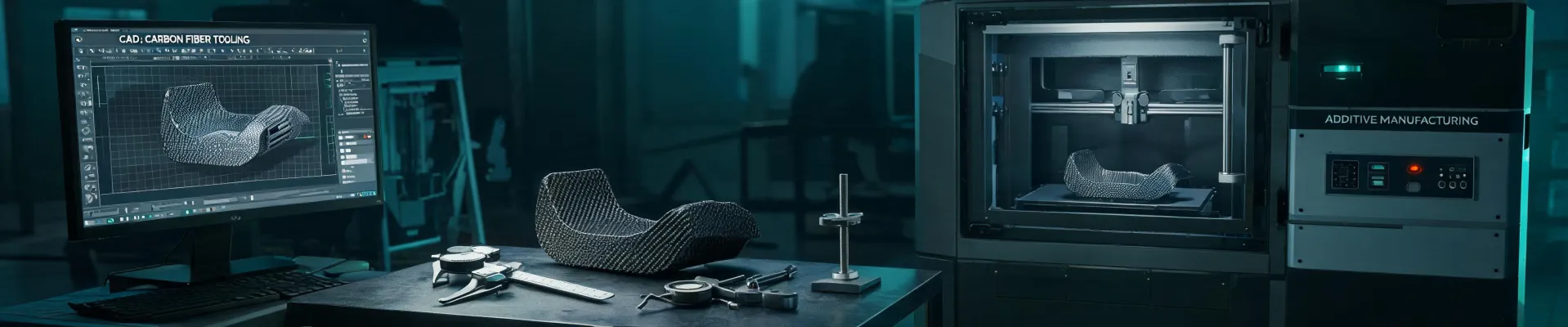
This is why I've sent specific programs to carbon-3d. They do carbon fiber 3D printing with a documented workflow, not just a flashy printer. They also run CNC machining, laser cutting/welding, and injection molding under one roof. That multi-process setup means fewer handoffs, and fewer handoffs means fewer chances for specs to get lost. The documentation they give me isn't overhead—it's the reason I can show our customer that their quality promise is real.
If you're buying 3D printed parts for production, stop asking 'which printer?' and start asking 'what proof do you have that this process works?' Trust me on this one: a machine name on a quote is not quality data. If I'm being honest, I still enjoy reading about new printers. But for production, I want to see a process validation report more than I want to see a benchmark print. A benchmark is a photo. A validation is evidence.
Wait—What About Budget Pressure?
I'm not saying you should ignore the budget. I'm saying the budget should include consequences. If the part is for an internal fixture or a non-critical prototype, a cheap vendor might be fine. Spend accordingly.
But when a part reaches a customer, quality is a revenue decision. 'We saved 15% on manufacturing' is a bad sentence to say out loud when the customer is staring at a failed part. And if you're in a regulated or professional market, this is also a legal issue: Per FTC guidelines (ftc.gov/business-guidance/advertising-marketing), if you say a part is 'industrial-grade' or 'carbon fiber reinforced,' you need evidence to back it up. As a buyer, I treat that as a sourcing requirement. A supplier who can't produce a material test report or a process validation isn't just risking my budget—they're risking my customers' trust.
Let me rephrase that: budget is a constraint, but it shouldn't define the quality bar. That doesn't mean every part should be premium. It means the cheap path should include an explicit risk review. If a part failure costs you a customer, a 20% price difference is not a saving. It's a gamble with someone else's money—the customer's.
I've made the cheap choice before. The cost tracking system still reminds me of it. The rework, the expedited shipping, the emotional labor of apologizing to a customer—those costs are real, and they don't show up on the initial quote.
So here's my rule after six years and $180,000 of annual spend: choose the supplier you'd be comfortable explaining to your best customer. Not the supplier who wins a spreadsheet.
The part that reaches the customer isn't a manufacturing output. It's a brand statement.
Quality isn't a cost center. No wait—that's not quite right. Quality is a revenue center disguised as a cost center. It's the cheapest insurance you'll ever buy for your reputation. Take it from someone who has signed both sides of that invoice. Here's what you need to know: your customers are not evaluating your supplier. They're evaluating you.