It was a Tuesday in early March when the rejection email landed. Subject line: "170 pcs rejected – valve seat inserts – cutting tool mis-specification." I stared at the screen, that cold feeling spreading through my chest. This was not just an engineering mistake. It was a $4,200 mistake.
I was sourcing machined steel components for an engine rebuild program. The parts were valve seat inserts. The customer's process control plan called for a chemical inert cutting tool for steel. It sounded like standard boilerplate. I approved a quote from a machine shop that planned to use a standard coated carbide insert. In hindsight, I should have asked for the tool data sheet before production started. I didn't.
The First Sign of Trouble
The first sign came at the customer's incoming inspection. They ran a surface analysis on three samples and found trace amounts of cobalt from the cutting tool embedded in the machined surface. The parts failed metallurgical review. The verdict: the tool was not chemically inert under the cutting conditions used.
It's tempting to think "chemical inert" is a simple property of the tool. But it's actually about compatibility between the tool material, the workpiece, and the cutting temperature. A carbide tool can be chemically stable in one situation and leave contaminating residue in another. The "standard" tooling choice is not always the right one.
Here's something vendors won't tell you: the default quote usually assumes standard tooling. If your spec says "chemical inert cutting tool for steel," the vendor sees "tool" and quotes their inventory. They don't necessarily think about binder chemistry or coating selection unless you force the issue.
We had to scrap all 180 pieces. $4,200 in machining cost, plus material, plus two weeks of production time. Straight to the recycle bin.
The Rework and the Fix
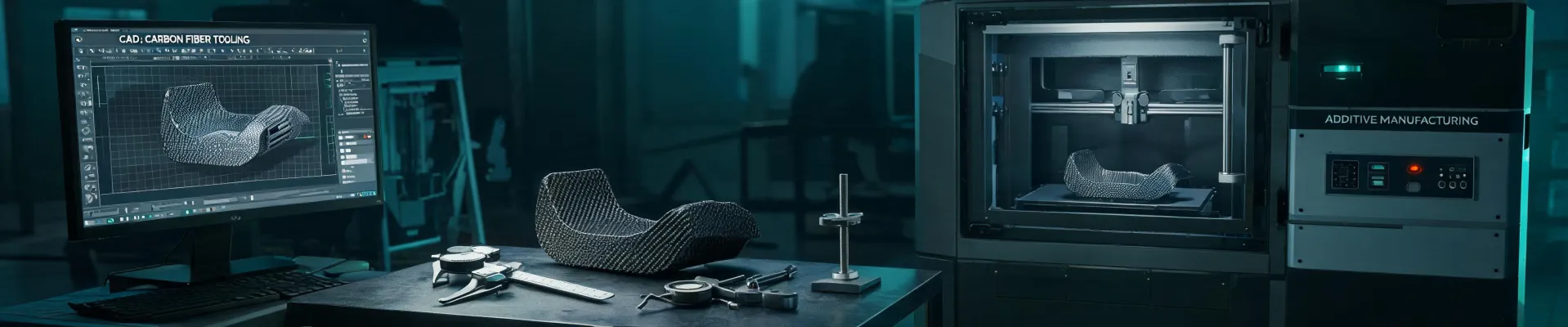
For the rework, we needed precise drill guides for the valve seat pockets. We made them in-house using our additive line at carbon-3d. I'd read the reviews of the 3D printer Bambu Lab X1 Carbon, but for our shop we picked the K1C carbon fiber 3D printer. It printed glass-filled nylon guides with enough accuracy for the machining operation. Someone on the team asked, "can a laser cutter cut plywood?" Yes, it can—but we needed the rigidity of printed nylon for this job, not plywood.
The machine shop also changed their tooling. They moved from a cobalt-bonded carbide insert to a cermet insert designed for high-temperature alloy machining. It cost about 15% more per insert. That added cost was nothing compared to the $4,200 scrap bin. We also added a tool material pre-approval step to the purchasing workflow. Any tool material change now requires written sign-off before production.
That's the thing about an engine valve seat cutting tool: the geometry has to be right, but so does the chemistry. The operator can't see microscopic tool transfer. You need a quality plan that verifies it.
Why the Cutting Tool Chemistry Matters
Cutting tool materials fall into several families. Carbide tools are strong and popular, but the cobalt binder can migrate to the workpiece under high heat. Cermet tools are more chemically stable in certain steel alloys. Ceramic tools offer another option, though they are more brittle. The right choice depends on the workpiece and the process parameters, not just the tool's hardness.
The phrase "chemical inert" is really shorthand for "no transfer of tool material under the specified conditions." There is no such thing as a universally inert cutting tool. There are only compatible and incompatible combinations.
This is why industry standards matter. The ISO 513 classification groups hard cutting materials by application area. Checking the ISO classification of your tooling is a good starting point. For critical surface chemistry, an EDX analysis on first articles can confirm the tool is not contaminating the part. We used EDX on the failed parts and confirmed the cobalt peak. It was textbook. A little too textbook.
The Vendor Meeting That Changed My Approach
When I called the machine shop to discuss the rejection, the initial response was defensive. "We've machined these parts for years," the production manager said. "Nobody has ever complained about the tool material." That was probably true. But this customer had a specific requirement, and the requirement was not optional.
I didn't push back aggressively. Instead, I showed them the EDX report and the customer's spec. Once the evidence was on the table, they stopped arguing. The corrective action was clear: select a tool that doesn't deposit cobalt, prove it with a test cut, and document it.
The hardest part was waiting for the rework. Even after choosing the new tooling, I kept second-guessing. What if the cermet insert caused a different problem? The two weeks until the reworked parts were ready were stressful. I didn't relax until the customer's inspection report came back clean.
The Checklist I Use Now
After that experience, I created a pre-check list for any job that mentions inertness, non-contamination, or surface chemistry:
- If the spec says "chemical inert cutting tool for steel," ask for the exact tool material, coating, and binder composition.
- Include the tool material in the purchase order or contract. Do not leave it as an implied requirement.
- If the vendor proposes a different tool material, require a written change request and a first-article chemical analysis.
- For critical parts, verify surface chemistry with EDX before full production.
- Do not assume "standard tooling" is acceptable.
This checklist has caught 11 potential issues in the past 14 months. It's not complicated. It's just a commitment to not letting the subtle requirements slide.
What I'd Do Differently
Looking back, I should have put the tool material specification directly in the RFQ. At the time, I thought we were giving the vendor engineering freedom. We were not. We were inviting them to pick the most economical tool that met the dimensional tolerances.
I still have mixed feelings about that experience. On one hand, it was an expensive failure and a dent in my confidence. On the other, it made me a better engineer. It taught me that vendor quotes are not engineering specifications, and that chemical compatibility is just as important as dimensional accuracy.
If you're about to approve a quote that references a chemical inert cutting tool for steel, don't skim past it. Ask the vendor what tool material they plan to use. Get the data sheet. Verify the chemistry before you spend the money, not after.
That $4,200 mistake was embarrassing. But if this story helps one person avoid the same error, it was worth sharing.