If you've ever asked for a quote on a carbon fiber 3D printed part and choked on the number, you already know the real question isn't 'what does it cost?' It's 'what does this part need?' A multi tool blade for tile cutting shouldn't be 3D printed. A pvc pipe garden tool holder probably shouldn't be machined from aluminum. And sometimes carbon fiber 3D printing is the cheapest option because every alternative is worse.
I'm a process engineer at carbon-3d. For 12 years I've handled custom manufacturing orders in metal and plastic, and I've personally made (and documented) 14 significant mistakes totaling roughly $40,000 in wasted budget. The most frustrating part of quoting? The same part gets evaluated five different ways, and the price swings by a factor of four. You'd think a CAD file speaks for itself, but it doesn't. So now I keep a checklist. This article is that checklist, organized by scenario.
There's No Universal 'Best' Process
Here's the uncomfortable truth: there is no universal answer to 'which process is best?' The right answer depends on volume, geometry, and how the part actually gets used. That's why I've split this into three scenarios.
- Scenario A: Low to mid volume, complex geometry, structural plastic part. Carbon fiber 3D printing often wins.
- Scenario B: High volume, with or without a soft-touch grip. This is where overmolding vs injection molding matters.
- Scenario C: Flat, sharp, or high-tolerance metal parts. CNC or laser cutting is usually the better choice.
Scenario A: Low Volume + Complex Geometry = Carbon Fiber 3D Printing
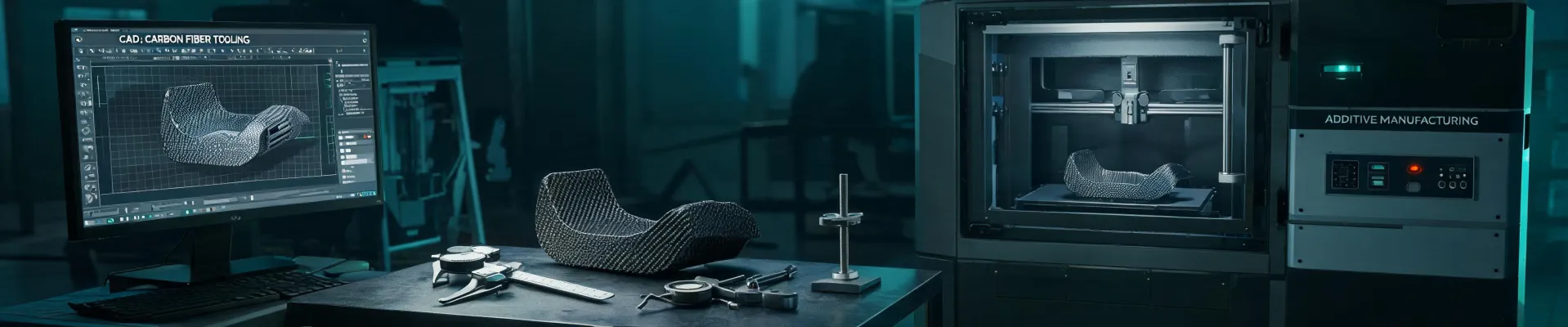
Carbon fiber reinforced nylon is my go-to for parts with internal channels, snap fits, or organic curves. For quantities under maybe 2,000 pieces, a printed part costs less than injection molding because the tooling doesn't exist. I've quoted jobs where the injection mold would have been $40,000 and the 3D printed order was $8,000. That's a no-brainer. The carbon 3d printer cost per part might still look high compared to molded plastic. But the total cost includes the mold, the floor space, the minimum order quantity, and the inventory you'll never use.
When people ask me about the best 3d printers for carbon fiber, I tell them to ask about process first. Yes, a hardened nozzle and enclosed chamber matter. But material selection and print settings matter more. You don't need to buy a machine to get the benefit. In my opinion, outsourcing the first run is the smart move until the design stabilizes.
To be fair, 3D printing has limits. If you need 50,000 parts, don't fight it—go to injection molding. Honestly, the machine matters less than the process.
Scenario B: High Volume or Soft-Touch Handles = Overmolding vs. Injection Molding
The classic 'overmolding vs injection molding' question is actually a geometry plus volume question. Injection molding is one material shot into one mold. Overmolding is a second material molded over a substrate—usually TPE over a rigid plastic core. If you need 50,000 units, injection molding is the logical route. If you need a grip that doesn't slip, overmolding is the better call.
Here's where 3D printing sneaks back in. For a short run of an overmolded part—say, a custom tool handle—the rigid insert can be printed on one of the best 3d printers for carbon fiber, then insert-molded with TPE. For 100 pieces, that beats paying for a steel mold. For 50,000 pieces, the printed core is way too slow. Same part, opposite decision.
A pvc pipe garden tool holder is a perfect example of the volume switch. If you're making 25 for your own garage, 3D printing in carbon fiber nylon is overkill but fine. If a home center chain wants 40,000, injection molding is the only sane route. The geometry doesn't change much; the quantity changes the answer.
Scenario C: Flat, Sharp, or Precise Metal Parts = CNC and Laser
Let me save you a mistake. No 3D printer, carbon fiber or otherwise, should produce a multi tool blade for tile cutting. That blade is flat, thin, hardened, and needs a precise cutting edge. Laser cutting and CNC machining are the right processes.
I once had an engineer ask if we could print a carbide-impregnated plastic blade to save cost. Calculated the worst case: chipping and a rejected batch. Best case: maybe it survives a few cuts. The expected value said no. We laser cut it from spring steel and the blade held up. Try printing that and you'd be fighting the material on every edge.
The upside was saving the customer $1,600 by skipping a laser-cut steel tool. The risk was chipping, a rejected batch, and a two-week delay. I kept asking myself: is $1,600 worth risking a repeat client? It wasn't.
That doesn't make 3D printing 'bad' and CNC 'good.' It means the decision has to be part-specific.
How to Tell Which Scenario You're In
Instead of 'figure it out yourself,' here's the filter I use on every RFQ:
- Annual volume: under 1,000 pieces, lean toward 3D printing. Over 10,000, lean toward molding. In between, get real quotes for all processes.
- Material: does the part see heat, chemicals, or impact? Carbon fiber nylon handles a lot, but not everything.
- Tolerance: if you need better than ±0.1 mm, 3D printed plastic often loses to CNC.
- Geometry: internal channels and snap fits push you toward printing or molding. Complex metal parts push you toward machining.
My experience is based on roughly 300 mid-volume production runs, mostly between 100 and 5,000 pieces. If you're designing for high-volume consumer products with tight cost targets, your numbers will be completely different. I can't speak to that world from experience.
Ignore Any Quote That Hides Setup Fees
This brings me to the transparency piece. I've learned to ask 'what's NOT included?' before 'what's the price?' A quote that says $1,000 but adds $500 in setup and finishing after you commit is not a quote—it's a teaser.
Per FTC guidelines (ftc.gov), advertising and pricing claims have to be truthful and not misleading. That standard should apply to industrial quotes too. It doesn't always, but it's the standard I hold our shop to. The vendor who lists all fees upfront, even if the total looks higher, usually costs less in the end.
If setup fee games sound familiar, look at commercial printing. Business card prices start around $20 to $35 for 500 cards, based on publicly listed prices from January 2025. But offset setup fees can add another $15 to $50 per color. Same trick, different industry. Ask the right question and you'll avoid the surprise.
The Takeaway
So what's the takeaway? Don't start by asking 'what's the carbon 3d printer cost?' Start by asking which process has the fewest hidden compromises for this part. Then compare total costs, including tooling, lead time, and failure risk. And if a quote doesn't show you every line item, assume something's missing.
Take it from someone who paid for his first few mistakes with real money: the cheap quote usually isn't the cheap one.
If you ask me, that's the only responsible way to buy custom manufacturing. It took me one expensive wrong decision to learn it.