
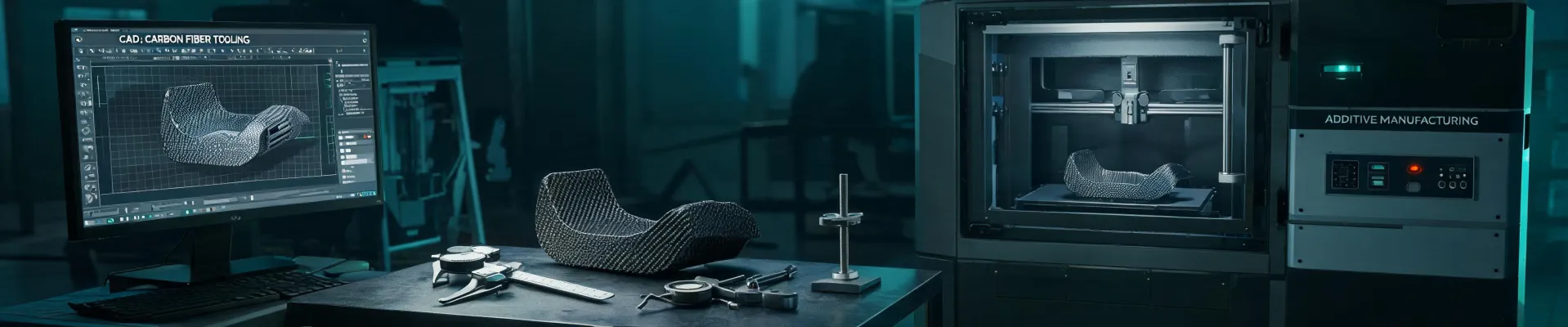
The request that started it
A customer sent me an X1 Carbon 3d printer review link on a Tuesday afternoon. That is not the usual way a quote request starts at carbon-3d, but after seven years of reviewing orders, I've stopped being surprised.
The customer was the founder of a small medical device startup. She had been reading an additive manufacturing medical news article, and she was wondering if she should buy a desktop printer or outsource the parts. She also asked the question I hear all the time: “Who has the best metal 3d printing service?” And then, in the same email, she mentioned a quote for a wholesale laser cutting machine.
“Probably no one,” I answered, “because you probably don't need metal.”
That sounded clever. It was not. That conversation led to a $3,200 mistake that I'd like to explain, because if you're buying carbon fiber parts, this one is easy to repeat.
The $3,200 mistake
The order was small: 12 brackets. The material was a 3d printer filament with carbon fiber — a 20% carbon fiber reinforced nylon that the customer had read about. She needed the brackets for a wearable device that had to flex and twist without cracking.
Small orders are where I usually get careless. I do not mean that as an excuse. I mean it as a pattern. When a customer orders 12 pieces instead of 12,000, my brain starts treating it as less important. That is backwards, and I know it now.
At carbon-3d, we handle industrial 3D printing, CNC machining, laser processing and injection molding. We're not a printer retailer. We don't sell wholesale laser cutting machines, and we didn't need the customer to buy one. We needed to make good brackets.
I should tell you who I am. I'm the person at carbon-3d who reviews files and writes work orders. I've been handling custom manufacturing orders for seven years. I've personally made and documented seven significant mistakes, totaling roughly $28,000 in wasted budget. Now I maintain our team's pre-order checklist, so other people don't have to repeat my errors.
The first mistake was back in 2017, when I made the classic specification error: I assumed “standard finish” meant the same thing to me and to the machining shop. It didn't. That cost $600 and a week. But the 2022 mistake was bigger.
In September 2022, I submitted the bracket for production. The model looked fine on my screen — four holes, three slots, a curved surface. The material data sheet said the 3d printer filament with carbon fiber was stiff and strong. So I wrote “standard orientation” on the work order and approved it. I knew I should have specified the build orientation in writing. But the part was small. The order was small. I thought, “What are the odds?”
Here's what I didn't think about: a 3D printed part is built in layers. Those layers have a direction. If you apply force across the layers instead of along them, the part can fail even when the material is strong. The bracket was going to flex. The layers needed to be oriented so that they ran with the flex, not against it. I didn't specify that. The production team followed the work order. They printed the bracket flat.
The parts came back looking beautiful. All 12 pieces. I measured holes and checked slots. Everything matched the CAD file. Then the founder tested the first bracket. It snapped along a layer line after a few seconds. The other 11 did the same, one by one. $3,200 in carbon fiber nylon, straight to the trash.
The founder did not yell. She just said, “I thought carbon fiber was the strong one.” That made it worse.
I wanted to blame the material or the 3d printer or the operator. But the work order said “standard orientation.” I wrote that. The operator followed it. That was the moment I realized that the part was never the problem. The process was the problem.
I don't have hard data on how many carbon fiber 3D printed parts fail because of build orientation. I wish I had tracked it from the beginning. But based on the files we review at carbon-3d, I'd say orientation is one of the most common silent causes of failure. It's not a printer issue. It's a planning issue.
We reran the 12 brackets with the layers oriented along the flex path, tested each one, and shipped them ten days later. The startup's prototype made it into their internal trial. The delay wasn't fatal, but it could have been. For a company with a small runway, ten days is a lot. I don't think that customer was angry. But I lost something else: the luxury of being careless with a small order.
What I check now
After that failure, I created a short checklist. In the 18 months since, we've caught 47 potential errors before they turned into expensive surprises.
- Define the load path. If a part will flex, twist, or carry weight, put it in the work order. The 3D file doesn't show it.
- Confirm material behavior with the person making the part. “3d printer filament with carbon fiber” is not a single product. Fiber content, drying, infill, and layer height all matter.
- Print one test piece before the full batch. A $90 test bracket is cheap. I wrote a $3,200 check for forgetting that math.
This checklist worked for us because we're a custom manufacturing shop, and nearly every order is a fresh geometry. If you're buying a home printer or comparing wholesale laser cutting machine prices for your own workshop, your list will look different. But the main idea still applies: machines don't know how you'll use the part. You have to tell them.
I think the biggest lesson came down to cost. The lowest quote is never the lowest total cost. At carbon-3d, we look at the full equation: part price, setup fees, shipping, rush fees, and the cost of getting it wrong. If someone quotes a price that assumes you know every detail, that quote is not a bargain. It's a guess.
So, who has the best metal 3d printing service? If you ask me, the best service is the one that asks about load paths before it quotes. The best service asks what the part does, not just what the file looks like. And the best service treats a 12-piece prototype with the same care as a 12,000-piece production run. That is also the service I'm trying to help run at carbon-3d.
If you're a small company, don't apologize for a small order. When I was starting out, the vendors who treated my $200 orders seriously are the ones I still use for $20,000 orders. Small doesn't mean unimportant. It means potential. And if you're the one selling the parts, every small order is a chance to prove it.
I still read the occasional X1 Carbon 3d printer review. But now I read it differently. The interesting question isn't whether a desktop printer can make a carbon fiber part. It's whether the person running it knows where the force will hit. That was the question I got wrong in September 2022. Now it's the first question I ask.