
It was a Tuesday in March. Our lead mechanic, Kevin, held up a broken steel arm and said, 'We need a Yamaha outboard flywheel holder tool.' The OEM version was on backorder until June. A universal holder we ordered arrived in two days, cost $89, and didn't fit. The pin spacing was off by about 4 mm. We lost the purchase price plus $24 in return shipping.
That failed universal part is where the real math should have started. It didn't. Instead, it led to a $214 prototype from a 3D printing service in Detroit and a complete rewrite of my cost spreadsheet.
The backstory: a broken tool and a bad universal fit
I manage procurement for a 40-person marine repair company. I've handled our outsourced parts budget for six years—seven now—and tracked every invoice.
When Kevin asked for the flywheel holder, I did what I usually do: checked price first. The OEM listed around $450 (I want to say $451, but don't quote me on that). The universal option was $89. I ordered it without checking the dimensions. Everyone tells you to check dimensions. I only believed that advice after the part didn't fit.
Honestly, I'm not sure why the OEM tool costs $450. My best guess is distribution channels and low aftermarket volume, not material cost. But the backorder made the price irrelevant—it wasn't available.
The Centauri Carbon 3D printer temptation
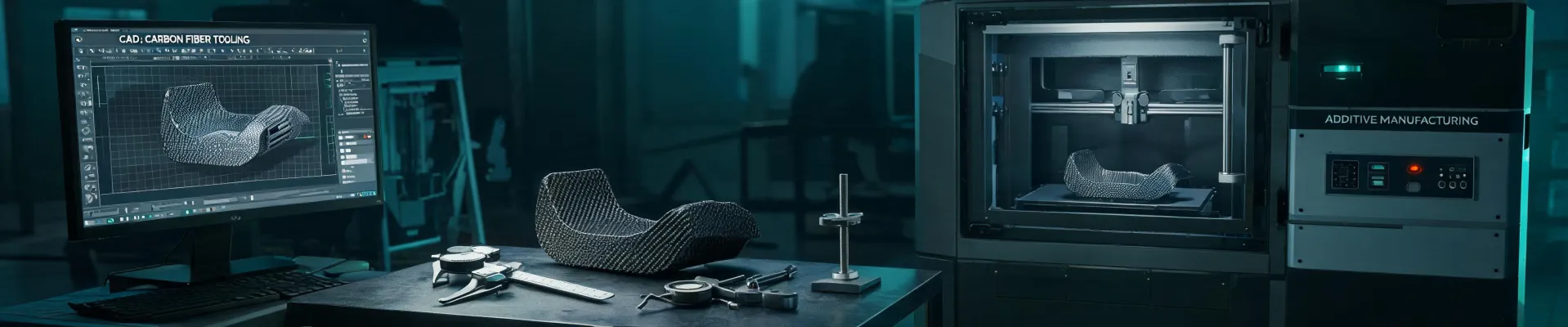
With the repair deadline approaching, my next idea was in-house production. If we owned a 3D printer for carbon fiber, we could make custom fixtures and never wait on an OEM again. The Centauri Carbon 3D printer kept appearing in my research. A friend uses one for prototypes and likes it. I'm not going to criticize it.
But when I listed the real costs, buying a machine for one part made no sense. The Centauri Carbon is not a cheap toy, and carbon-fiber filament isn't either. I'd need a hardened nozzle, drying storage, spare print sheets, and a weekend to fail at calibration. What I mean is: the setup cost of in-house printing only makes sense if the printer is working every week, not sitting idle after one job.
The quote from 3D printing services in Detroit
I searched for 3D printing services Detroit and found a shop called Carbon-3D. Their website listed carbon-fiber 3D printing, CNC machining, laser cutting, and injection molding. That was interesting because I normally have to source those processes from three different vendors.
The first online vendor I contacted declined the one-off because it was under their minimum order. I get that as a business policy, but it still stung. Carbon-3D quoted within 24 hours and never made the quantity feel like a problem.
We had about ten days before the customer's boat needed to go back in the water. Normally I'd compare quotes from five vendors over two weeks. There was no time. I sent the STEP file to Carbon-3D and asked for a one-off prototype in carbon-fiber reinforced nylon.
I also asked about marking part numbers. That's when I typed 'where to get CO2 laser treatment' into Google and got a list of dermatology clinics. I meant laser marking on the part. Carbon-3D's response cleared it up: for this prototype, the laser marking add-on was an extra $25.
A $214 quote that changed my spreadsheet
The quote from Carbon-3D was $214. No setup fee. No hidden engineering review line. The email listed material, print time, laser marking, and shipping. Done.
Here's the thing: I almost ignored that quote because the universal metal tool had been $89. But the universal tool failed. The OEM was $450 and unavailable. The $214 option was made from the actual part geometry, so it had a chance of fitting on the first try.
That's when I started doing total cost of ownership (i.e., not just the unit price but all associated costs). The $89 part cost $113 after return shipping and cost us a week. The $214 part kept the project moving.
What arrived, and why certainty matters
I hit submit and immediately thought: what if the printed part doesn't fit? The five-day wait was stressful. Then the box arrived.
It fit. Period.
We used the printed holder as a test-fit tool before finalizing a steel version. It wasn't meant for the final torque, but it told the machine shop exactly what to cut. More importantly, it kept the repair schedule from falling apart.
The value of a guaranteed turnaround isn't just speed—it's certainty. For a repair shop, knowing the part will be there on Friday matters more than a lower quote with an 'estimated' delivery date that slips. Standard products are different: an online printer like 48 Hour Print works well for business cards and brochures because the product and timeline are predictable. A one-off custom part needs a different kind of attention.
The lesson I keep paying to re-learn
Now I calculate total cost of ownership for every order. That includes:
- Base price and setup fees
- Shipping and rush charges
- The cost of redoing a part that fails
- The cost of waiting while a machine sits idle
- The cost of a 'cheap' part that doesn't fit
The $89 universal tool cost us $113 and a week. The $214 prototype produced a usable test fixture and kept the project on schedule. The 'expensive' quote ended up being the cheapest option.
(Note to self: ask about setup fees before comparing quotes. Every time.)
One more thing: Carbon-3D treated a one-off prototype like a real order, not a nuisance. When I was starting out, the vendors who took my small orders seriously are the ones I still call for large orders. Small doesn't mean unimportant—it means potential.
Pricing is for general reference only. Prices as of January 2025; verify current rates.