-
Scenario 1: Prototypes and Low-Volume Parts—Carbon Fiber 3D Printing
-
Scenario 2: Mid-Range Volumes and Tight Tolerances—CNC Machining
-
Scenario 3: High Volumes—Injection Molding (Especially Medical Devices)
-
Scenario 4: Surface Refinement or Selective Material Removal—CO2 Laser Treatment
-
How to Decide Which Scenario You’re In
Every week, I review another batch of components that went through the “wrong” process. Not because the manufacturer was careless—choosing between carbon fiber 3D printing, CNC machining, CO2 laser treatment, and injection molding genuinely depends on your situation. There is no single “best” process. There is only the best process for your volume, tolerance, materials, and the quality bar your customers expect.
As a supplier quality manager at a custom manufacturing company, my job is to catch problems before they reach your shop floor. In 2024, we audited 187 new part numbers across engineering, medical, and consumer product projects, and rejected 11% of first articles. Not because the parts were unusable—but because they didn’t meet the visual and dimensional standards that make a product look professional. That’s the part most process-selection guides miss: quality isn’t just about meeting specs. It’s about how your customer perceives your brand from the first glance.
To help you think through it, I’ll break down the four scenarios we see most often. This isn’t a universal checklist, but it reflects what I’ve learned after 500+ vendor reviews. (Maybe 480—I’d have to check our ERP system.)
Scenario 1: Prototypes and Low-Volume Parts—Carbon Fiber 3D Printing
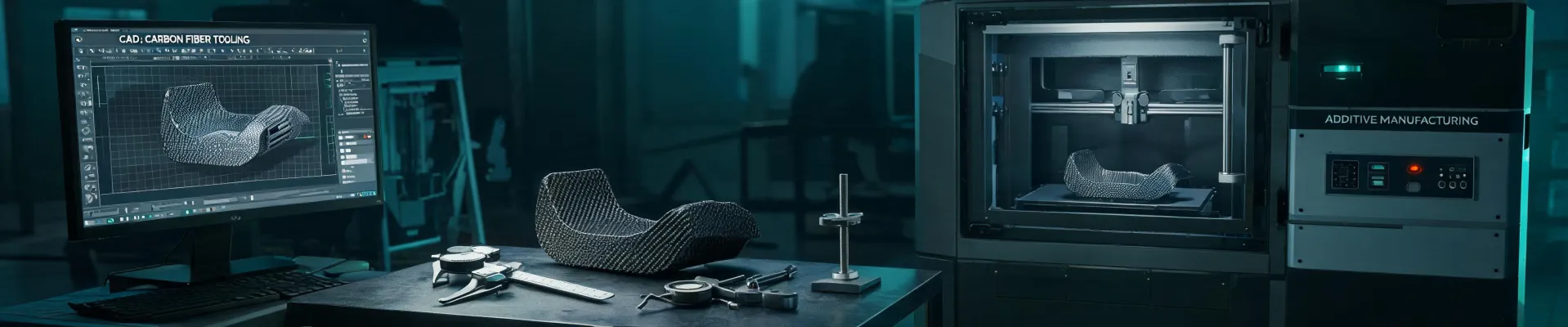
If you need fewer than 100 functional prototypes, carbon fiber 3D printing is usually the fastest way to validate design. Machines like the AMS X1 Carbon 3D printer or the X Carbon 3D printer family can lay down nylon-carbon composites that are stiff enough for structural checks, and the price per part is minimal while you’re iterating.
But the quality trap is layer lines. In Q1 2024, we shipped a prototype bracket with visible layer lines to a client. Function was fine. Their engineers asked if production parts would look the same. That one question cost us a week of explanation and nearly lost the follow-up order. We now spec a light sanding or bead-blasting step for any customer-facing prototype. It takes an extra 15 minutes, and the perception shift is enormous.
If you’re comparing specific printers, focus on motion control and extrusion consistency. The AMS X1 Carbon 3D printer gets mentioned a lot in reviews, but in our audits, the real differentiator is how well the machine maintains extrusion temperature over a job. If that drifts, you get voids—and a broken prototype.
Scenario 2: Mid-Range Volumes and Tight Tolerances—CNC Machining
When your quantity moves into the 500–5,000 range and you need tight tolerances in aluminum, stainless steel, or engineering plastics, CNC machining is the pragmatic middle ground. Tooling for injection molding is too expensive at this volume, and 3D printing doesn’t give you the material properties you need.
I once managed a run of aluminum housings where the anodize color varied by 0.3 ΔE—a tiny difference invisible to most eyes. Our customer’s customer rejected them because they didn’t match the brand sample. That reject cost $22,000 and delayed the launch by three weeks. Now every contract includes a color chip sign-off, and we check each batch against it under standardized lighting.
That’s the lesson: in the middle volume range, you’re no longer just making parts. You’re manufacturing brand consistency. A 0.3 ΔE shift can make a product look “cheaper” to a customer who has the original sample in hand.
Scenario 3: High Volumes—Injection Molding (Especially Medical Devices)
Above 10,000 pieces, part cost per unit drives decisions. Injection molding offers the best per-part economics and the most repeatable tolerances—if you can absorb the upfront tooling investment. In the micro injection molding medical devices market, where components are small and quality requirements are strict, this repeatability is non-negotiable. You cannot have 0.1 mm drift on a catheter tip in lot #42.
Here’s where quality and brand perception intersect directly. Who owns VMC Drinks? I don’t know. But if they sell beverages with small molded caps, the cap quality directly affects their brand. The same applies to your medical device or industrial component: the end user may not know why your product feels more trustworthy, but they feel it.
If you’re buying molded parts, resist the urge to shop on piece price alone. I’ve seen companies save $0.02 per part and lose entire contracts because of inconsistent gloss or flash. A mold that’s built right will pay for itself in fewer rejects and better customer confidence.
Scenario 4: Surface Refinement or Selective Material Removal—CO2 Laser Treatment
Sometimes your part needs something that conventional machining or printing can’t easily deliver: precise surface texture, selective etching, or removal of thin coatings. In those cases, CO2 laser treatment can be more repeatable than manual abrasion. If you’re in Dallas, there are local shops offering CO2 laser treatment on a job-basis, so you don’t need to buy a laser for a short run.
From a quality perspective, the laser either hits the spec or it doesn’t. We’ve used CO2 laser treatment for removing a thin polymer layer from metal inserts, and the repeatability was better than any manual process we tried. Just make sure your supplier uses a prior-art file (the exact CAD path) and documents the power/speed settings. That documentation becomes part of your quality record.
How to Decide Which Scenario You’re In
Ask these three questions:
- What’s the expected annual volume? Under 100, think 3D printing. 500–5,000, CNC. Over 10,000, injection molding. Between 100 and 500, you’re in the gray zone—evaluate both and compare quality consistency, not just unit cost.
- What tolerance and material properties do you truly need? If your part sees stress, CNC or molding. If it’s a visual check, 3D printing with post-processing can work.
- How will your customer perceive the first article? That first look shapes their opinion of your entire company. If it looks cheap, they’ll assume the engineering behind it is cheap too.
No process is universally superior. At carbon-3d, we run all four processes, so we’re constantly switching between them as projects move from prototype to production. The key is to match the process to your quality bar—not the other way around.
Pricing and machine capabilities as of January 2025. Verify current specs with your supplier before committing.