
-
If You Are Searching for Any of These, Read This First
-
1. What matters in those Elegoo Centauri Carbon CoreXY 3D printer specs?
-
2. Is the Elegoo Centauri Carbon 2 Combo 3D printer a production machine?
-
3. What should I check on the newest desktop fiber laser cutting machine?
-
4. Wait, is a CO2 laser for acne scars the same as a laser cutter?
-
5. What is a CNC mill used for?
-
6. Which should I buy first: 3D printer, laser, or CNC mill?
-
7. Why do hidden costs matter more than the sticker price?
If You Are Searching for Any of These, Read This First
Procurement manager at a 40-person precision manufacturing shop. I have managed our outsourced fabrication budget ($420,000 annually) for 7 years, negotiated with 30+ vendors, and documented every order in our cost tracking system. My experience is based on about 200 mid-range orders for carbon-3d printed parts, CNC milled components, and laser-cut sheet metal. If you are working with ultra-budget hobby equipment, your experience might differ.
The same questions keep showing up in searches: Elegoo Centauri Carbon CoreXY 3D printer specs, the Elegoo Centauri Carbon 2 Combo 3D printer, the newest desktop fiber laser cutting machine, and the evergreen what is a CNC mill used for. They are not the same question, but they all come down to one thing: should you buy a desktop manufacturing tool or outsource the work?
Here is what I tell clients before they spend money:
- What matters in those Elegoo Centauri Carbon CoreXY 3D printer specs?
- Is the Elegoo Centauri Carbon 2 Combo 3D printer a production machine?
- What should I check on the newest desktop fiber laser cutting machine?
- Wait, is a CO2 laser for acne scars the same as a laser cutter?
- What is a CNC mill used for?
- Which should I buy first: 3D printer, laser, or CNC mill?
- Why do hidden costs matter more than the sticker price?
1. What matters in those Elegoo Centauri Carbon CoreXY 3D printer specs?
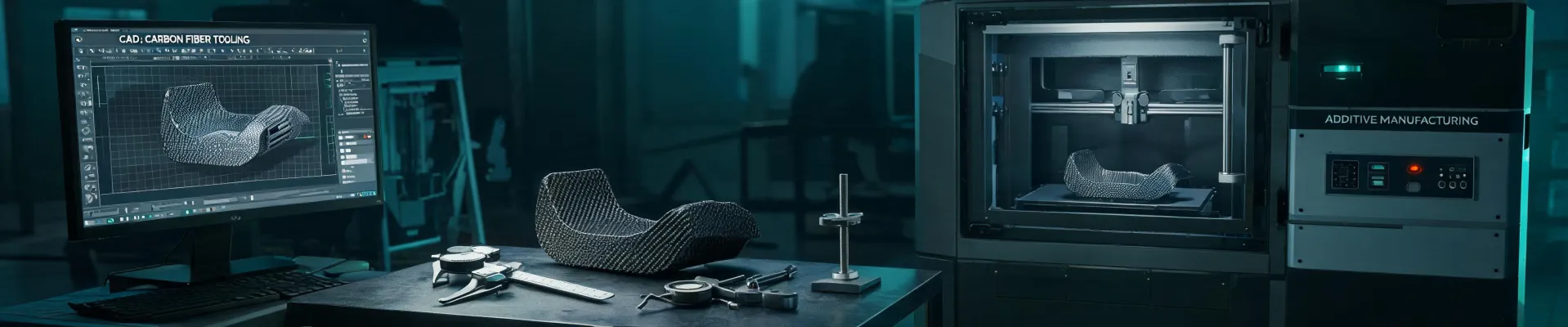
Start with the phrase itself: Elegoo Centauri Carbon CoreXY 3D printer specs. The CoreXY part matters more than the brand. CoreXY means the print head moves on a rigid frame using a belt-driven XY mechanism, instead of pushing the whole bed around. For carbon fiber filament, a rigid frame is important because abrasive materials need steady, repeatable motion.
But the spec sheet does not tell you the real issue: does the machine have an all-metal hot end, a hardened steel nozzle, and an enclosed chamber? Without those, carbon fiber filaments can destroy a brass nozzle and warp parts. I am not 100% sure of the current specs for that particular model—I have not benchmarked one. What I mean is: compare those three features, not the marketing photos. And if a vendor quotes carbon fiber 3D printing, ask for their minimum wall thickness and layer adhesion data. That is where the hidden costs live.
2. Is the Elegoo Centauri Carbon 2 Combo 3D printer a production machine?
Short answer: it depends on what production means. The Elegoo Centauri Carbon 2 Combo 3D printer gets searched a lot because people see 2 Combo and assume it is a two-station workhorse. Put another way: it might mean two materials or two colors, but that is not the same as two independent machines.
From a cost perspective, a multi-material machine only pays for itself if you consistently use the second material. To be fair, for a small shop that wants to prototype flexible gaskets or overmolded handles, the combination can be practical. But if you plan to run batch after batch of end-use parts, check the build volume, heated chamber, and how long a material swap actually takes. That 30-second fast swap on a spec sheet can become half an hour when you count purging, cleaning, and recalibration. I made that mistake in Q2 2024. The cheaper option looked smart until we discovered a full material change ate an entire afternoon.
3. What should I check on the newest desktop fiber laser cutting machine?
Newest desktop fiber laser cutting machine is a dangerous phrase. Newest is not a spec. I look at four things: source power (MOPA or Q-switched), working area, spot size, and whether the chiller is in the quote. A fiber laser cuts metal by melting it with focused light; if the vendor cannot give a cut chart for the exact material grade and thickness you plan to use, you are buying a promise.
I almost bought a new generation desktop unit at a trade show because the booth sample looked perfect. My best guess, after talking to two operators, is that the sample was cut at half speed and then edge-cleaned. It looked impressive on video, but the production cycle time was terrible. Get test cuts. Not one. Three, on your parts, at your tolerances. Then calculate TCO including ventilation, filtration, and how often safety interlocks get checked. That last part is the prevention-over-cure thing: a 5-minute safety check saves a $2,000 repair.
4. Wait, is a CO2 laser for acne scars the same as a laser cutter?
Let me clear this up before I go further: if you searched co2 laser acne scar before after and landed here, this is the manufacturing kind of CO2 laser, not the dermatology kind. In a machine shop, a CO2 laser is a gas laser for cutting non-metals like acrylic, wood, and certain composites. A fiber laser is a solid-state laser and is usually the right choice for metal. A medical CO2 laser ablates skin; an industrial CO2 laser cuts sheet goods. Different power, different safety requirements, different budget.
If you are looking for skin treatment, I am not your source. If you are looking for manufacturing, the biggest procurement mistake is assuming a CO2 laser will cut steel just because it says laser. It will not. You need a fiber laser for most metals. Getting that wrong is like buying a paper printer and expecting it to print on aluminum.
5. What is a CNC mill used for?
A CNC mill uses a rotating cutting tool to remove material from a block called a workpiece to create features like slots, holes, threads, and flat surfaces. The machine moves the cutter in multiple axes while the part stays clamped on a table. What is a CNC mill used for, in plain terms? It is subtractive manufacturing: you start with more material than you need and cut the excess away. That makes it the opposite of 3D printing, which adds material layer by layer.
In my shop, we use CNC mills for aluminum brackets, steel fixture plates, and custom components that need tight tolerances. A 3D printed part can be great for a prototype, but when I need a hole that is exactly 10.00 mm with a milled finish, I send it to a mill. If a vendor says they can do it all in additive, ask how they will hold a bore tolerance. Sometimes they can, but you want that conversation before the quote, not after the part arrives. The same discipline applies as with Pantone colors: according to Pantone Color Matching System guidelines, Delta E under 2 is expected for brand-critical colors. If you do not specify it, you get close enough. For a milled part, write down the tolerance in millimeters.
6. Which should I buy first: 3D printer, laser, or CNC mill?
From a budget standpoint: none, until you have mapped the jobs. I sound negative, but I have seen a $4,000 desktop laser sit unused for a year because nobody installed ventilation. Another company bought a 3D printer for carbon fiber and discovered the filament cost triple what they estimated. Start with the parts you actually get paid to make.
If you do one-off prototypes, a CoreXY 3D printer with an enclosed chamber might be your best first buy. If you cut thin metal or acrylic every week, a fiber laser could pay for itself. If you need precise features in metal, a used CNC mill might beat both, if you have the space and a maintenance person. I have mixed feelings about desktop production machines. On one hand, they make prototyping accessible. On the other, they create a lot of partially used equipment in real factories. My compromise: put every machine through the same TCO spreadsheet, including training time, downtime, and the cost of a second machine when the first cannot handle the job.
7. Why do hidden costs matter more than the sticker price?
Because the sticker price is not the cost. I learned this in 2023 when we compared two vendors for a quarterly order. Vendor A quoted $12,000. Vendor B quoted $9,800. I almost went with B until I calculated the total cost: B charged $1,200 for setup, $350 in order handling, and a $750 sustainability fee that only appeared in the final contract. The total from B was $14,100. Vendor A's $12,000 included everything. That is a 17% difference hidden in fine print. I said 'complete quote'; they heard 'base price'.
The same logic applies to buying equipment. A $1,500 laser can need $600 in extraction, $300 in air assist, and $200 in tooling before it makes the first cut. Five minutes of verification beats five days of correction. That sounds like a slogan, but it is the truest thing I can tell you about desktop manufacturing equipment. At least, that has been my experience with mid-range production orders. If you are buying hobby-level gear, your mileage will differ.