I coordinate rush manufacturing orders at carbon-3d, so I'm the person clients call when a deadline is about to slip. In the past six years, I've managed more than 200 rush orders across 3D printing, CNC machining, and injection molding. Here are the direct answers I keep giving clients—no sales pitch, just what's been tested in real orders.
Can 3D printers print carbon fiber?
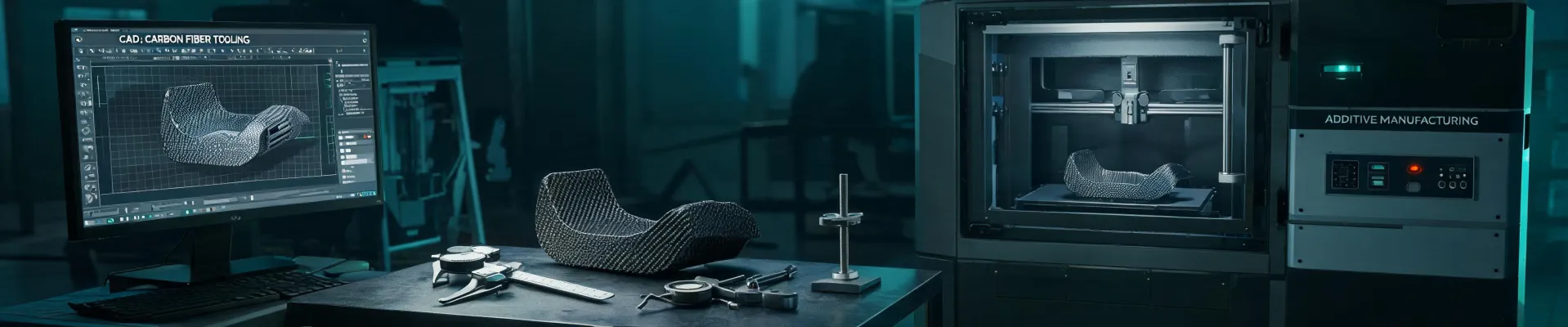
Yes, but "carbon fiber" here means a plastic matrix mixed with chopped carbon fiber, not a pure carbon fiber strand. You're printing carbon-fiber-reinforced nylon, PETG, or polycarbonate. The carbon fiber adds stiffness and dimensional stability, but the plastic is still the primary structural material. Some industrial systems can lay continuous carbon fiber into a part, but on desktop-level printers, you're almost always printing chopped fiber.
So when people ask "can 3D printers print carbon fiber," the honest answer is: yes—with a compatible printer, dry filament, and realistic expectations. It won't behave like an aluminum part, but it can be surprisingly close for lightweight jigs, housings, and brackets.
One thing that catches people off guard: carbon fiber filament is abrasive. A brass nozzle can wear out within hours. If you're going to use it consistently, invest in hardened steel or ruby nozzles and a filament dryer. That's not a luxury; it's a prerequisite.
What 3D printer can print carbon fiber?
A printer that can handle carbon-fiber-filled filament needs three things: a hardened steel or ruby nozzle, a direct-drive extruder, and a hotend that reaches at least 250–300°C. Nylon-based carbon fiber also needs an enclosure to avoid warping. These aren't exotic features anymore; many prosumer and industrial machines include them as standard.
But "what 3D printer can print carbon fiber" is the wrong first question. The better question is "what filament do I actually need?" Carbon-fiber-filled PETG is easier to print than carbon-fiber-filled nylon, and for many parts it's strong enough. If I'm being honest, most failures I've seen in 3D printing come from wet filament, not the printer. Carbon fiber nylon absorbs moisture aggressively. At 40–50% humidity, an open spool can be unusable in a few weeks. Dry it for 8–12 hours before printing, and keep it in a dry box.
If this sounds like a lot of process control, it is. That's why many engineering teams skip the learning curve and send carbon fiber 3D printing to a service that already has the workflow down.
What is binder jetting in additive manufacturing?
Per ISO/ASTM 52900:2021, binder jetting is an additive manufacturing process where a liquid binder is selectively deposited onto a powder bed to join powder particles. The powder can be metal, sand, ceramic, or sometimes polymer. After the printing step, the part usually goes through curing, debinding, and sintering—so the total lead time is longer than "print" might suggest.
You'll see binder jetting used for metal parts, sand cores for casting, and full-color ceramic or gypsum parts. It's excellent for geometries that are hard to machine and for producing multiple parts in one build. But it's not usually the best process for carbon fiber composites. If you're asking "what is binder jetting in additive manufacturing" because you're comparing it to FDM carbon fiber printing, think about your material first.
One more practical note: binder jetted parts often have some porosity until they're sintered or infiltrated. That affects mechanical properties, surface finish, and how the part behaves under load. For a rush order, the extra post-processing steps can eat your entire buffer. I'd rather use CNC machining or injection molding for a tight timeline unless the geometry truly demands additive manufacturing.
What does "ISO 9001:2015 certified plastic injection molding" mean?
It means the molder's quality management system has been audited against ISO 9001:2015. According to ISO (iso.org), that standard requires documented quality processes, customer focus, risk-based thinking, and periodic internal audits. As of January 2025, ISO 9001:2015 is still the current version; verify with your registrar.
It's not a guarantee that every part is perfect, but it tells you that when something goes wrong, there's a system for catching it and a paper trail to trace it. In a rush, it's tempting to skip certification and pick the cheapest mold shop. I've done that. In 2023, we lost a $40,000 contract because the non-certified "equivalent" produced parts with inconsistent wall thickness. The client didn't care about the excuse; they remembered a bad first impression. Now, our policy is simple: production injection molds and large quantity orders go through ISO-certified molders only.
That extra diligence is an investment in how clients see you. The first article inspection report, the material certificate, the consistent finish—those are signals of quality. When a client opens the box and sees parts that look like they came from a serious operation, your brand moves up a level. That's hard to put a price on.
Do carbon fiber parts need special cutting tools?
Yes. Carbon fiber composites are abrasive. A standard tool that works fine in aluminum will dull quickly, and a dull tool causes delamination, fiber pullout, and burned resin. You want carbide or diamond-coated end mills with proper chip evacuation, plus feeds and speeds that avoid overheating the resin.
And yes, "speedball cutting tool" has crossed my desk more than once. But a Speedball linoleum cutter is a different category: it's designed for soft material and art projects, not carbon fiber. For production, tool geometry matters more than brand. Use sharp, coated carbide tooling, check the tool path direction, and take light passes. If machining 3D printed carbon fiber, watch for internal voids; they can turn a clean cut into a rough edge.
A quick practical check: if the tool feels hot after machining, you're probably running too fast or feeding too lightly. The resin should be cutting cleanly, not melting. Adjust before you continue.
What's the biggest misconception in all of this?
It's tempting to think "3D printing is fast and therefore always the fastest way to make a part." That's oversimplified. More often than not, the fastest process is CNC machining from a solid billet, or injection molding if tooling already exists. Binder jetting can be even slower because of sintering cycles. I've made the mistake of assuming a new 3D printed workflow would beat the old CNC method. It didn't—the first print warped, the second one jammed, and we missed the deadline. That's when I stopped trusting "should" and started checking actual lead times.
Now, when a client asks for a rush order, I don't just ask what process they want. I ask what the part needs to do, what the deadline is, and what failure looks like. Then I compare options based on real schedules. If that sounds obvious, it is—but you'd be surprised how many people fall in love with a technology before they look at the calendar.