
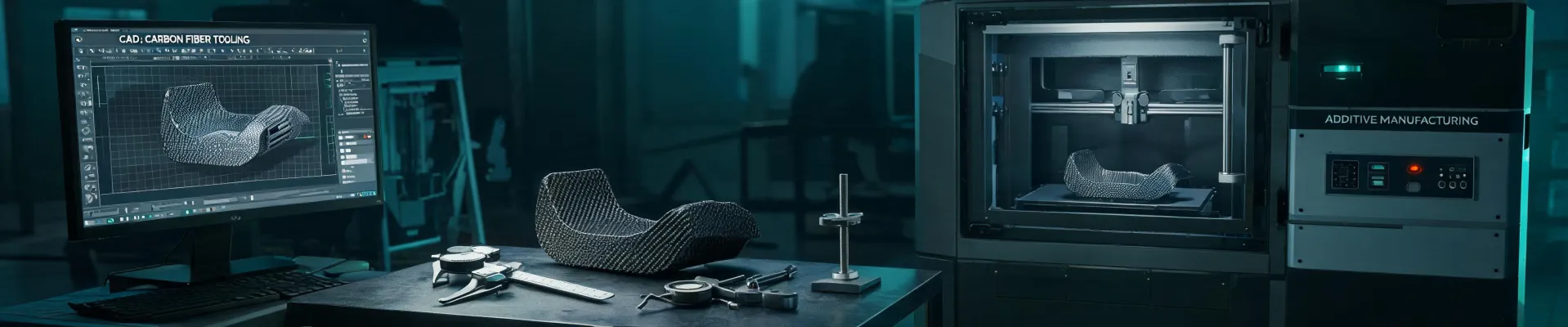
I review a lot of purchasing decisions. During our Q1 2024 quality audit, the same question came up over and over: should we buy the equipment, or should we outsource the part? For carbon fiber 3D printing, that question usually gets phrased as 'what's the best carbon 3D printer?' For laser work, it becomes 'should I get a fiber laser engraver for stainless steel?' or 'is laser welding expensive?' These are all pretty much versions of one comparison: owning your process versus using a manufacturing partner.
I'm a quality and compliance manager at carbon-3d. I've reviewed roughly 200 builds and production batches per year for the last four years. I'm not an applications engineer, so I can't give you exact cycle times for your part. What I can tell you, from a quality perspective, is how to compare these two paths without getting burned. Here's my framework: cost, capability, consistency, lead time, and risk.
Dimension 1: Capital cost versus variable cost
Let's start with the one everyone leads with. Buying a production tool means a capital expenditure. A machine like the Centauri Carbon is not a hobby purchase, and a decent fiber laser engraver for stainless steel is a line item you'll need to justify. Add tooling, installation, training, maintenance, floor space, and software. That's before you make your first part.
Outsourcing turns that into a variable cost. If you work with a service company like carbon-3d, you pay for the part and the expertise. Is laser welding expensive? It can look that way on an invoice, but compare that to buying a welder you use four times a year. The same logic applies to China fiber laser cutting machine factories: the per-part rate can be low, but you still need to account for shipping, duties, and communication time.
From the outside, in-house looks cheaper because there's no per-part charge. The reality is that cost-per-good-part is the number that matters. I've seen companies spend months dialing in a carbon 3D printer and still scrap 30% of first articles. I do not mean occasional scrap. I mean consistent, measurable loss.
The conclusion: if your workload is continuous and predictable, buying can win. If it's project-based or still in development, outsourcing usually wins.
Dimension 2: Capability and materials
The 'best carbon 3D printer' question bothers me a little because there is no best. There's the best for your geometry, your material, your volumes. Some machines print chopped carbon fiber nylon; a few do continuous fiber reinforcement. The 3D printer Centauri Carbon is one example of a carbon-capable system, but choosing it without mapping your requirements is backwards.
Laser capability has the same trap. A fiber laser engraver for stainless steel is great for marking and shallow engraving. It will not cut thick plate efficiently. If you need large-format cutting, high-power cutting machines in a qualified China fiber laser cutting machine factory may make more sense. But don't assume 'factory' means better. It means different. You need to verify the factory's quality system, not just its spec sheet.
What most people don't realize is that a service provider can offer a broader process range than any single machine you buy. Need a carbon fiber 3D printed prototype today and a laser-cut stainless bracket tomorrow? A multi-process partner can handle both without you managing two capital budgets.
The conclusion: equipment choices should follow the part, not the other way around.
Dimension 3: Consistency and quality control
This is where my role gets personal. Quality isn't a machine. It's a system of measurement, feedback, and discipline. In-house, you control that system directly. But you also own the failures. I've rejected batches when a specific dimension was visibly off. Normal tolerance on a printed hole was 0.2 mm, and we were getting 0.5 mm variation. The supplier claimed it was 'within industry standard' because printed parts are allowed more drift. Maybe. But the part failed assembly.
Outsourcing can be better if the supplier has stronger controls than you do. It can also be worse if you choose on price alone. People assume the lowest quote means the vendor is more efficient. What they don't see is which costs are being hidden or deferred. We had to redo an order because the surface spec wasn't clear in the PO. That was a $22,000 lesson and a delayed launch.
Granted, this cuts both ways. I've also seen in-house print farms produce less repeatable work than a qualified factory because the operators were too busy to run calibration prints. Better equipment doesn't automatically mean better quality. Period.
The conclusion: whichever path you choose, build a verification protocol around it. If you don't know your tolerance, ISO 2768 is a common starting point for machined parts, but printed carbon parts often need custom thresholds.
Dimension 4: Lead time and capacity
Speed is where most people get fooled. In-house looks faster because the machine is in your building. But your machine isn't idle. If it's running, you wait. If it's down, you wait. If your only operator is on vacation, you wait. 'Standard turnaround' in a factory often includes buffer time, too. It's not necessarily how long your order takes; it's how the factory manages its queue.
I'm not a logistics expert, so I can't speak to carrier optimization. What I can tell you from a quality perspective is that lead time commitments need to be written down. China fiber laser cutting machine factories can move quickly if the part is simple and the spec is clear. The bottleneck is usually communication and freight, not cutting speed.
For carbon 3D printing, the printer itself is only part of the timeline. Post-processing, cleaning, inspection, and delivery all add time. A 3D printer Centauri Carbon might have a fast print speed, but if your support removal process takes two days, the total time won't feel fast. A service provider that runs multiple shifts can often compress that cycle.
The conclusion: calculate total lead time, not just processing time. A machine down the hall isn't fast if the workflow around it is slow.
Dimension 5: Risk and the expensive hidden costs
Let's answer the laser welding question directly. Is laser welding expensive? The equipment can be. Consumables, shielding gas, training, and safety controls add up. But the expensive part is usually the mistakes. A wrong heat setting, contaminated material, or unspecified joint design can scrap components that already went through machining or 3D printing. That's where the true cost lives.
Every contract should include measurable requirements. In 2022, I implemented a verification protocol for our suppliers: every first article gets a dimensional check, material certificate, and surface condition report. Since then, our rejection rate dropped meaningfully. I don't have permission to share the exact number, but the change was significant. The point is that quality risk can be managed on both paths. It just has to be explicit.
The conclusion: a cheaper supplier is not lower risk. Neither is a more expensive machine. Risk is managed by specifications, inspection, and accountability.
So which path should you choose?
Instead of a blanket answer, here's how I'd decide in your situation:
- Use a service provider if you need iterative prototyping, multiple processes, or bridge production while you validate the market.
- Consider buying if you have a stable product roadmap and know your materials and quality requirements in advance.
- Outsource laser welding unless you have a consistent daily workload. If someone asks 'is laser welding expensive,' the correct response is usually 'compared to what kind of volume?'
- Look at China fiber laser cutting machine factories for high-volume cutting, but audit their quality system before you send a single drawing.
What was best practice in 2020 may not apply in 2025. The fundamentals haven't changed. Material quality, measurement, and traceability still rule. But the execution has transformed. Good carbon 3D printers are more accessible, laser systems are more powerful, and factory networks are more integrated. The smart move isn't to defend an old preference. It's to compare cost, quality, capability, lead time, and risk on your actual parts.
My experience is based on mid-size production orders and prototype runs. If you're doing aerospace certification or medical implants, your requirements will be different. That's okay. The best decision is made with eyes open to the trade-offs.