
I'm a manufacturing engineer who has been handling custom fabrication orders for eight years. I've personally made—and documented—37 significant mistakes, totaling roughly $54,000 in wasted budget. Now I maintain our team's pre-production checklist so other people don't have to repeat those failures.
In my first year (2017), I assumed the lowest quote was the smartest choice. Four budget overruns later, I realized the problem wasn't the vendors. It was my calculation. I wasn't comparing total cost; I was comparing price tags.
When I say "many," I do not mean a couple of edge cases. I mean 14 of 26 "low bid" winners on our cost ledger ended up costing more than the next-highest quote. That's why this article won't give you a single "best" process. It'll help you pick the one that fits your situation.
Four questions before you pick a process
There is no universal answer because the right process depends on geometry, material, quantity, and risk. I use these four questions:
- How many parts do you need now—and next year?
- What mechanical loads, temperatures, or chemicals will the part see?
- Which tolerances and surface finishes actually affect function?
- What's the failure cost if the part doesn't work?
Once you have those answers, the scenarios below become useful.
1. Carbon fiber composite parts, low volume
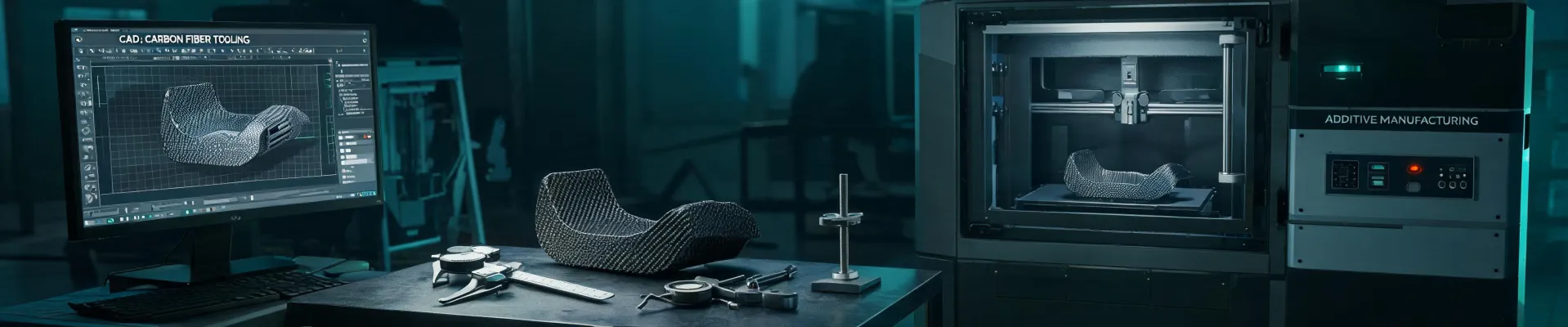
If you're prototyping a lightweight bracket or duct, an X1 Carbon 3D printer with chopped carbon-fiber filament is a good tool. It's fast, inexpensive, and great for form-fit-function checks. I've used that route for weeks of validation work.
But production is a different conversation. Chopped carbon-fiber filament is not continuous fiber. It won't give you the same stiffness or fatigue life as a woven layup or an industrial continuous-fiber system. In my first year, I approved a "carbon" bracket that looked right and broke exactly where fiber orientation wasn't considered. The affected order was $3,200—straight to scrap.
Now I tell customers: if you need 5 to 100 good parts with a repeatable layup, ask for a quote from a service like carbon-3d before assuming a desktop printer is enough. And if you're verifying a supplier, treat a carbon 3D logo as a starting point, not a guarantee. Ask them to state the fiber type, orientation, and test data.
2. Precision metal and thin-wall joining
For aluminum or steel parts with tight tolerances, CNC machining is my default. If the drawing calls out ±0.1 mm or better, printing it and hoping for a machined fit is a mistake. I made that mistake with a $1,200 fixture order. The printed part measured fine in the center and failed at the mounting holes.
When you're joining sheet metal, the laser welding machine working principle matters: a focused laser beam melts the material and creates a keyhole that allows deep penetration. The heat-affected zone stays small, which is why laser welding is ideal for thin sections where TIG would burn through.
Yes, laser welding costs more per hour. But I've seen a $30 weld failure turn a $1,200 part into a $500 repair. No math makes that favorable.
3. High-detail plastic parts: the SLA question
"Can you recommend an SLA 3D printer?" I get asked this more than any other question. My answer is always "it depends"—then I ask what resin, what part size, and what budget.
SLA is brilliant for fine detail, casting patterns, and small precision parts. But the true cost includes resin wastage, isopropyl alcohol, curing station, ventilation, and failed builds. I went back and forth for two weeks on whether to buy a desktop SLA or use a service. On paper, buying looked cheaper. My gut said service. I chose service because the project was too time-sensitive to risk an operator learning curve. That decision saved us about a week.
If you already own an SLA printer, use it for prototypes. For production runs, calculate TCO before assuming your "free" machine is free.
4. Polycarbonate sheet: the PC laser cutting trap
PC laser cutting is a job where acrylic settings will not work. Polycarbonate absorbs the CO2 laser wavelength, and if your settings are off, you get edge charring and micro-cracks.
In September 2022, we cut 200 PC panels with edges that looked fine the day they were cut. The micro-cracks showed up seven days later—after the customer reported it. We didn't have a formal validation process for sheet cutting at the time. That cost us $450 in replacement material plus two days of trust rebuilding.
I started filing that under "2024" in my head. It wasn't. The PC panels failed in October 2022. Now our checklist includes a test coupon for every PC laser cutting run. We cut a 50×50 mm sample, flex it, inspect it under magnification, and only then start production.
How to know which scenario you're in
If your part is metal with tight tolerances, start with CNC. If it's a thin metal assembly, add laser welding to the conversation—and understand the laser welding machine working principle before you compare prices. If it's plastic that needs high surface quality, SLA is worth it. If it's carbon fiber composite, get a continuous-fiber quote or a service like carbon-3d before you trust the X1 Carbon 3D printer. If it's polycarbonate sheet, ask the shop how they test PC laser cutting edges. Above 500 parts, injection molding is a separate conversation—and one where TCO usually beats 3D printing.
Then calculate total cost of ownership. My formula:
Base price + shipping + setup fees + expected rework rate + downtime + your engineering time.
The $500 quote turned into $800 after shipping, setup, and revision fees. The $650 all-inclusive quote was actually cheaper. That was the moment I stopped being loyal to low price and started being loyal to total cost.
Since we created that checklist in Q1 2024, we've caught 47 potential errors before they hit production. Some were small. Some would have been four-figure failures. As of January 2025, our ledger has 200+ orders—maybe 210, I'd have to check the system. The count isn't the point. The point is that nearly every expensive mistake came from choosing a process or vendor based on price instead of TCO.
Don't learn the expensive way. Use mine.