
Here's something I learned the hard way: when you're up against a hard deadline in manufacturing, paying for guaranteed delivery isn't a luxury — it's the cheapest insurance you can buy. I manage purchasing for a mid-size engineering firm, about $150k annually across 8 vendors. In the last three years I've placed orders for carbon fiber 3D printed housings, CNC-machined hard metal tooling, laser-cut enclosures, and injection-molded prototypes. And I've been burned by "probably on time" promises more times than I'd like to admit.
The Moment It Clicked
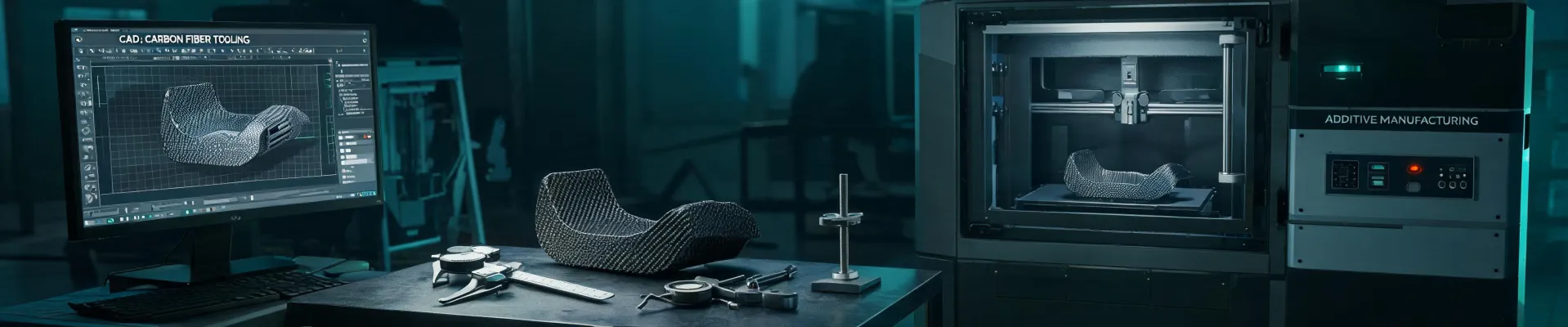
March 2024. We had a trade show in Austin — massive opportunity, $15k in expected leads from that one event. Our engineering team needed a custom carbon fiber bracket printed on the largest carbon fiber 3D printer we could find, because the part was about 2.5 feet long. The regular lead time was 10 business days. We had 12 days until the show.
I got three quotes. Vendor A quoted $800 with a 10-day estimate. Vendor B quoted $1,100 with a 7-10 day estimate. Carbon-3D quoted $1,200 and said "we'll ship in 5 days guaranteed or you don't pay the rush fee." That $400 premium (about 50% over the cheapest quote) felt painful. Honestly, I hesitated. I ran the numbers: worst case if Vendor A missed — we lose the $15k opportunity plus last-minute expediting costs; best case if Carbon-3D delivered — part in hand with a week to assemble.
I went with Carbon-3D. The part arrived in 4 days. The trade show went perfectly. That $400 was the best spend of my quarter.
What Rush Fees Actually Buy
It's not speed. It's certainty. A lot of people assume rush fees just pay for faster machines or overtime staff. The reality is more subtle. From the outside, it looks like vendors just need to work faster. What you don't see is that rush orders often require completely different workflows: dedicated production slots, pre-reserved material, priority inspection, and separate shipping arrangements. That's what the premium covers — the ability to say "yes, this will ship on Wednesday at 3pm, no questions."
I've seen surface illusions at work here. The cheap quote looks great on paper, but the hidden cost of uncertainty is real. When you don't have a guaranteed delivery, you spend mental energy tracking, follow-up calling, and worst-case planning. That internal overhead adds up.
The Real Comparison Isn't Price vs. Price
Let's talk about additive manufacturing hard metals. We needed a tungsten carbide insert for a jig recently. Standard quote: $350 with 8-day lead. Rush quote: $550 with 3-day guaranteed. The procurement manager in me flinched at $200 extra. But I asked myself: what happens if the standard quote arrives a day late? The assembly line stops. The line downtime costs $4,000 per hour. The $200 rush fee avoided a potential $4,000 per hour risk.
This same logic applies across all our processes — CNC, laser, injection. Whenever I see a price gap and think "I could save $X," I now force myself to calculate the downside. Is $X worth potentially missing a product launch? Losing a client? Having to reorder and pay double for emergency shipping?
A Common Concern: "Don't 3D Printers Suck Up Electricity?"
I get asked this a lot from engineers who've seen desktop FDM machines. They wonder: do 3D printers take a lot of electricity? Industrial carbon fiber printers aren't your desktop hobby machines. A commercial-grade system like the ones Carbon-3D uses draws maybe 2-3 kW during operation — less than a small HVAC unit. For a 12-hour print, that's maybe $3-5 in electricity. Not nothing, but trivial compared to material cost or labor. The real electricity cost is in the post-processing equipment (CNC, laser, curing ovens), and even that's a rounding error in a production budget.
So no, electricity isn't a reason to avoid rush orders. The real cost driver is the dedicated capacity — which is exactly what you're paying for with a rush premium.
What About the Alternatives?
Someone will say: "Why not just buy a printer yourself? Like an Elegoo Centuri Carbon or something and run it in-house?" That's fair for some companies, but not when you need industrial-grade precision, certified materials, or multi-process integration. The Centuri Carbon is a capable machine for certain use cases, but when your part needs to survive a 1000-cycle fatigue test or mate with a CNC-machined aluminum interface, you want a vendor with end-to-end quality control. Plus, our team doesn't have the bandwidth to manage yet another machine and material supply chain.
I've also seen people try to mix processes — like using a CO2 laser resurfacing service in Austin for finishing while printing elsewhere. That creates coordination risk. One vendor who does print, CNC, laser, and injection under one roof (like Carbon-3D) simplifies the headache. The premium you pay is partly for integration.
The Bottom Line
I'm not saying always pick the most expensive option. I'm saying: when your deadline is real, pay for a guarantee. The cost of being wrong about "probably on time" is far higher than the rush fee. This was accurate as of Q4 2024 pricing — the market moves fast, so verify current rates before budgeting. But the principle hasn't changed in the five years I've been doing this: uncertain cheap is more expensive than certain expensive.
Honestly, I'm still not sure why some vendors consistently beat their quoted timelines while others consistently miss. My best guess is it comes down to internal buffer practices and how rigorously they manage capacity. But I don't need to understand that to make the right call. I just need to ask one question: Can I afford to be wrong?
So next time you see a rush fee, don't think of it as an extra cost. Think of it as buying a guarantee — and in my book, that's worth the premium every time.