
Most people think rush orders are just about paying more
They're wrong—and I've been in the trenches long enough to know why.
In my role coordinating custom manufacturing for industrial clients, I've handled hundreds of rush projects. Some worked. Many didn't. And those that failed had something in common that had nothing to do with expediting fees.
Let me show you what I mean.
The surface problem: "We need it faster"
That's what a client calls and says. Always. The real question is never the timeline—it's whether the timeline is physically achievable with the given process.
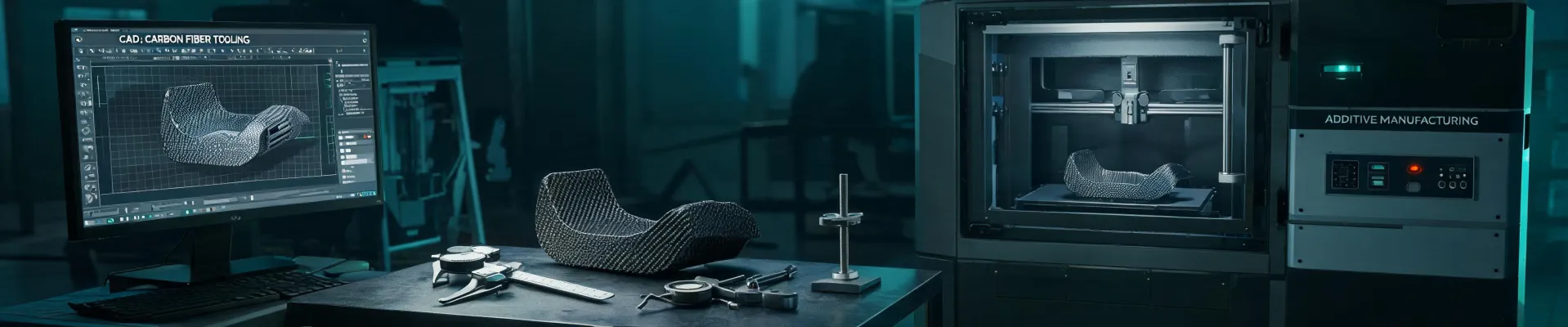
For example, I once had a customer ask for a carbon fiber composite part delivered in 5 business days. Normal lead time was 14. The quote I gave them wasn't special pricing—it was the only way to make it work: custom resin system, pre-cured stock instead of layup, same-day design review. Total: $3,800 base, plus $1,250 rush premium.
Did they take it? No. They went to a shop that said they could do carbon fiber in 5 days for $2,600. That shop isn't doing real carbon fiber—they're likely using prepreg sheet or outsourcing to a 3D printing hub and calling it aerospace grade. That part failed QA in week two. Cost the client a $12,000 rework and their client's deadline.
The surface problem is always about speed.
The deeper issue is about trusting process claims without verification.
Why rush orders fail: the three hidden breakdowns
Here's what I've seen blow up on the tightest timelines. Not once. Repeatedly.
1. Material availability is not the same as material capability
You can get carbon fiber filament delivered overnight. That doesn't mean it will print with the right mechanical properties. The resin needs to cure, the fiber to bond, the interlayers to fuse. In a rush, corners get cut that don't show up until the part is under load.
I've heard this line: "We can source the same material you use." Translation: they can order something with a similar name. Not the same certified grade. A year ago, a vendor used "industrial-grade carbon fiber" on a rush CNC routing job without specifying the fiber orientation. The part delaminated under standard torque.
That wasn't a cheap mistake. It was a $5,000 lesson in what "same" actually means.
2. Design for manufacturability is often skipped
In a rush, people skip the DFM check. They send a 3D model to the printer and hope. But for carbon fiber printing—or any hybrid process—the print orientation, support structure, and post-processing steps all depend on geometry. If nobody vets the design, you get a part that looks right but fails where it matters.
The most frustrating part of this: it's entirely preventable. But in a rush, verification is the first thing cut. You'd think clients would learn after the first failure, but tight deadlines make people desperate.
After the third time this happened with different projects, I created a simple rule: any project under 7 business days gets an automatic 4-hour design review before quoting. It adds time upfront. It saves twice that in rework.
(I should mention: this policy came from losing a $15,000 contract because we tried to quote fast without checking the geometry.)
3. Post-processing can't be expedited
This is the one people miss most. A carbon fiber print takes X hours. CNC machining takes Y hours. But finishing—sanding, curing, coating, inspection—those steps are largely fixed. You can't accelerate a 24-hour cure cycle to 6 hours without sacrificing the material properties.
Yet I've seen vendors promise "same-day finishing" for complex parts. What they mean is they'll skip the full cure and ship a green-state part. That part loses its geometric accuracy within 48 hours.
In Q3 2024, a client called on a Thursday needing a 3D-printed mold for an injection run starting Monday. Normal turnaround: 10 days. We quoted 5 days with a premium. The client's procurement team found a cheaper vendor who said they could do 3 days. That vendor shipped a part that hadn't been fully cured. The mold cracked on the fourth injection cycle. The total cost to the client: $18,000 in missed production plus a $6,000 rush fee on a replacement.
The $400 price difference turned into a $24,000 headache.
How do I know? Because I ended up handling the replacement. And yes—we charged our standard rate. No premium. It was the right thing to do, and it earned a multi-year contract.
The deeper truth: rush orders reveal your supplier's real capabilities
A vendor who can handle a true rush—not just a shorter timeline, but an emergency—is a vendor who has: spare capacity, material buffer, flexible scheduling, and process verification. Those vendors aren't cheap. They're actually more expensive on a per-unit basis.
But here's the thing I've learned the hard way: their total cost is lower.
I now calculate TCO before comparing any vendor quotes for rush projects. The breakdown looks like this:
- Base price: the obvious number
- Shipping premium: typically +25-50% for expedited
- Rush fee: +50-100% for under 7 business days
- Revision cost: if the first part fails, it's double time
- Risk premium: the potential cost of a missed deadline, estimated conservatively at 10-30% of project value
When I run the numbers, the budget-tier rush quote almost always comes out higher. Not always—sometimes it works. But the odds go against you.
So what actually works?
If you're facing a rush order, here's what I'd suggest, based on my experience:
Ask for the DFM review before you commit to a timeline. If a vendor says they can deliver in 3 days without looking at the design, they're probably skipping something.
Pay for the material certification. It's cheaper than the rework when the wrong grade shows up.
Build in a buffer. Not for the delivery date—for your internal schedule. Use the saved time to verify the first article before production runs.
And when you're comparing quotes, don't just look at the price. Look at what steps they're including. If one vendor's price is 40% lower and their timeline is half as long, ask yourself what they're cutting. Then ask them.
I've never regretted paying more for a rush that actually delivered. I've regretted plenty of cheap quotes that didn't.