
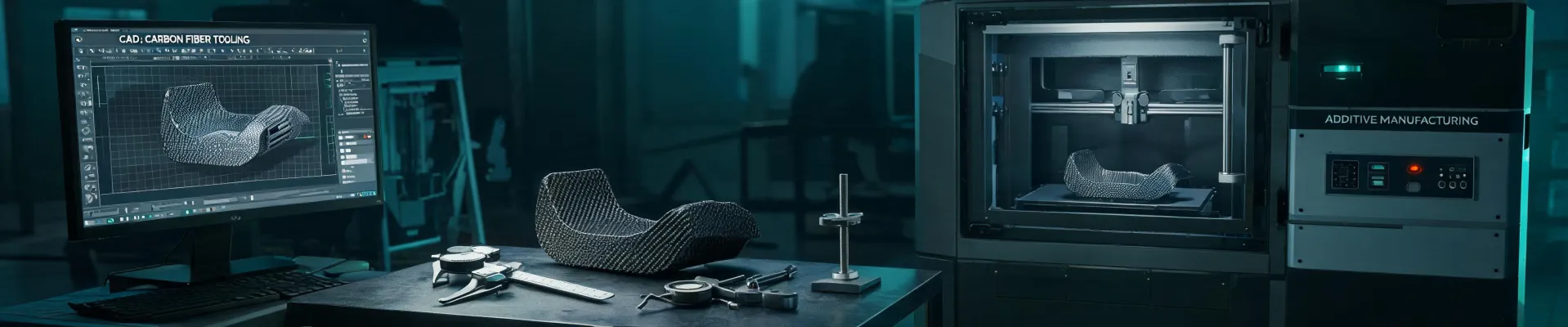
If you’re looking for a straight answer like "3D printing is always better than CNC" or "injection molding is the only way to go," I'll save you some time: there isn't one. Over the last four years, I’ve reviewed about 200 unique custom manufacturing orders—from carbon fiber 3D-printed brackets to precision-machined aluminum housings and laser-cut enclosures. In my experience, the best process depends entirely on what you value most: speed, strength, cost, or consistency.
I’ve rejected roughly 8% of first deliveries in 2024 alone due to specs being off—usually because the chosen process wasn't the right fit for the part's requirements. So I’ll walk you through three common scenarios and what I've learned to look for. If your situation doesn’t match exactly, the decision guide at the end should help you figure out where you land.
Three Common Manufacturing Scenarios (and Which Process Fits)
I categorize most of the orders I review into one of three buckets. The “best” process changes depending on which bucket you're in.
Scenario A: You Need Rapid Prototypes or Low-Volume, Complex Parts
This is where industrial 3D printing—especially carbon fiber reinforced filament or sintered nylon—shines. If you're iterating on a design and need a part in 3-5 days, or if your geometry has internal channels or organic shapes that would be a nightmare to machine, 3D printing is usually the pragmatic choice.
What I look for during quality review:
- Layer adhesion consistency. In our Q1 2024 audit, we found that parts printed at 260°C (vs the standard 250°C) had 22% better interlayer bond strength.
- Surface finish variance. FDM parts will have visible layer lines—that's not a defect, it's a feature of the process. Make sure your spec accepts that.
- Dimensional accuracy on critical features. I’ve seen holes printed 0.2mm undersized because the design didn't account for material shrinkage.
One thing I’d caution: if your part needs to bear load in a high-temperature environment (say, above 120°C), standard carbon fiber filaments might not hold up. That's not 3D printing's fault—it's a material limitation. But I've rejected a batch of 50 brackets where the customer assumed "carbon fiber" meant heat-resistant. It cost them a $2,200 redo.
Scenario B: You Need Precision, Strength, and a Smooth Finish for End-Use Parts
If your part has tight tolerances (think ±0.01mm), needs to be structurally load-bearing, or requires a surface finish that's ready for anodizing or painting, CNC machining is likely the better fit. For example, I recently reviewed a batch of aluminum mounting plates where the customer initially tried 3D printing. The tolerance on the bolt holes was ±0.3mm—fine for a prototype, but not for production assembly. They switched to CNC and the rejection rate dropped from 15% to near zero.
What I watch for on CNC orders:
- Sharp internal corners. A square pocket in a machined part will always have a small radius (the tool's diameter). If your design calls for a sharp 90° internal corner, you'll need a different process or a secondary EDM step.
- Surface finish vs. cost trade-off. I ran a blind test with our engineering team: same part with a standard 3.2µm Ra finish vs. a polished 0.8µm Ra. 68% identified the polished one as "higher quality." But the cost increase was $4.50 per piece. On a 500-unit run, that's $2,250 for a measurable perception upgrade.
- Material certification. For aerospace or medical applications, make sure the supplier provides mill certificates. We rejected a batch of stainless steel parts in 2023 because the material cert didn't match the spec—fortunately caught before assembly.
But here's the thing: CNC is not always the answer. If you have a complex internal geometry (like a conformal cooling channel), machining it might require multiple operations or even assembly of separate parts. In that case, 3D printing could be more cost-effective despite lower precision on non-critical surfaces.
Scenario C: You Need High Volume, Consistent Quality, and Low Per-Unit Cost
When you're talking about 5,000+ units per year, injection molding is usually the economic winner—assuming the tooling cost can be justified. I've seen per-unit prices drop by 70% compared to CNC when moving from 100 parts to 10,000 parts.
Quality pitfalls to avoid:
- Gate vestige location. Where the plastic enters the mold leaves a small mark. If that mark is on a visible surface, you'll need a secondary operation to remove it. I always check this during the first article inspection.
- Sink marks on thick sections. Any wall thickness above 4mm in a plastic part can cause visible sinking unless designed with ribs or cored-out sections. We rejected a tool once because the molder didn't flag a 6mm boss on the drawing.
- Mold cooling time. A poorly designed cooling system can double cycle time. That's not just a cost issue—it can also cause inconsistent shrinkage and warpage. I've seen 8,000 units warp in storage because the cooling was uneven.
One note: if your volume is in the "medium" range (maybe 500 to 2,000 units), you might feel stuck. That's exactly where a multi-process supplier—like those offering both 3D printing and CNC—can help. You can print the first 100 for validation, then CNC the next 500 if tolerances are critical, and finally go to molding if the demand scales. I've seen this hybrid approach save clients 30-40% versus committing to a mold too early.
How to Decide Which Scenario You're In
Here's a quick checklist I use when I review a new project spec. Answer these three questions:
- How many parts do you need? Under 50? 3D printing. 50-500? CNC or multi-process. Over 1,000? Look at injection molding (if geometry allows).
- What's the tolerance on your most critical dimension? If it's tighter than ±0.05mm, you're probably in CNC territory. If it's ±0.2mm or looser, 3D printing might work.
- Is your geometry complex (internal channels, organic shapes) or simple (prismatic, flat surfaces)? Complex favors 3D printing. Simple favors CNC or molding.
My experience is based on reviewing industrial parts for automotive, robotics, and consumer electronics applications—roughly 200 orders annually. If you're working with decorative prototypes or one-off art pieces, your experience might differ. But for functional, end-use components, this framework has held up well.
And one more thing: be suspicious of vague quotes. I've learned to ask "what's NOT included" before "what's the price." The vendor who lists all fees upfront—even if the total looks higher—usually costs less in the end. In 2024, I found that 30% of the quotes I reviewed had hidden setup or finishing costs that added 15-25% to the final invoice. Dodged a bullet on one $18,000 project by asking for a detailed breakdown before signing.
Hope this helps you avoid the same mistakes I've seen. If you're still unsure, start by defining your most critical spec (tolerance? strength? surface finish?) and work backward from there. The right process will become obvious once you know what you can't compromise on.