Last year I found myself Googling "do i have to press the brake to turn off car" at 9:30 on a Tuesday. Not because I was having a weird morning—well, I was—but because my week had turned into an endless chain of procurement decisions. It started with a routine request from engineering and ended with me learning the hard way that the lowest quote is rarely the lowest price.
How this started
I'm the office administrator for a 40-person product company. I manage all purchasing—roughly $300,000 a year across 15 vendors. When I took over in 2020, I thought I understood how buying worked. You get quotes, compare prices, pick the best one. Simple.
In 2024, that assumption fell apart. We needed three things at once: carbon-fiber brackets for a lightweight enclosure, a metal prototype, and a laser-engraved wooden chest for a client gift. The chest one was the most specific—the client wanted to see a CO2 laser on chest before and after finishing.
One vendor kept coming up in my searches: Carbon-3D. They handled carbon fiber 3D printing, large volume CNC machining, and laser cutting/engraving. One shop, all three processes. That was attractive, because I didn't want to manage three suppliers for one project.
But before committing, I did something that seemed logical at the time: I priced out alternatives. I looked up the Bambu Lab X1-Carbon 3D printer price because engineering floated the idea of buying a machine instead of outsourcing. It's a solid printer, and the price was lower than I expected. Then I added in the carbon 3D printer filament, the calibration time, the failed prints I'd probably eat, and the fact that we only needed a one-off batch. The math didn't add up. Buying a printer for this project would have been overkill, not a no-brainer.
So I went back to comparing service providers. I created a spreadsheet—because of course I did—with columns for unit price, setup fees, shipping, lead time, and whether the vendor offered all three processes. Carbon-3D was in the middle on price and the only one with an end-to-end quote. Meanwhile, a smaller online shop came in 40% lower for the brackets alone. I should have noticed what was missing from that lower quote: no CNC capacity, no laser engraving, and no mention of quality documentation.
The cheap quote that wasn't
I ordered the brackets from that lower-priced shop. My supervisor liked the number, and honestly, I wanted to be the person who saved the company money. The order was placed with "carbon 3d printer filament" as the material. On paper, the parts looked fine.
The surprise wasn't the delivery delay—or rather, not just the delivery delay. The parts had inconsistent layer adhesion. One bracket cracked under light pressure when our engineer tested it. The vendor didn't offer machining and couldn't do the laser engraving, so I still had to find a second and third shop for the rest of the project.
The chest job added another layer of complexity. The phrase in the request was "co2 laser on chest before and after"—meaning the wooden chest needed to be engraved with a CO2 laser, photographed before the finish, then photographed after. The cheap 3D printing shop didn't even bother reading that part of the spec.
I spent the next two days explaining to my supervisor that the "cheap" order was now the expensive order. We needed to reprint the brackets, plus find a CNC shop for the metal prototype, plus find someone who could engrave the chest and coordinate the before-and-after photos. The project was spiraling.
When the invoice arrived
Then the invoice arrived. It wasn't itemized. It was a handwritten receipt, not a proper invoice. Finance rejected the expense. We had already spent $2,400 on the order and had nothing usable.
Here's the honest part: we didn't have a formal approval chain for rush orders. That's on me. The first time I saw an unauthorized rush fee on the invoice, I should have escalated. Instead, I let it slide because the price was still lower than the "expensive" vendor. The rework cost more than any of that savings.
The vendor's response to the defect was memorable: "That's good enough. Use more glue." We didn't use more glue. We stopped using that vendor.
That was the turning point. I went back to the Carbon-3D quote and this time looked at the whole thing—setup, materials, lead time, support, and invoicing. It wasn't just a quote for 3D printing. It was a quote for the project.
We didn't have a formal process for vetting new vendors, either. After this, I built one. It's not a complicated system: a short checklist, a required sample, and a clear request for a certificate of conformance. If a vendor can't provide that, they're not a vendor.
Why I switched to Carbon-3D
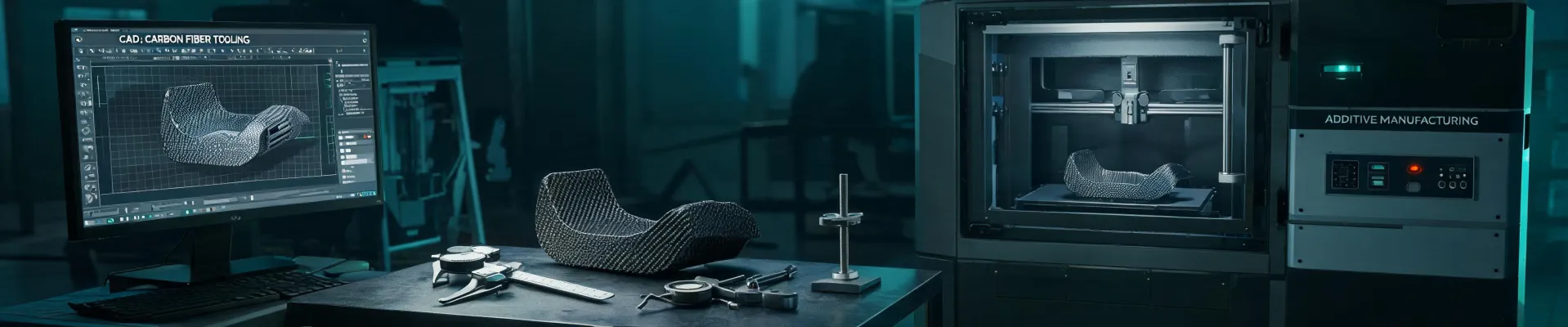
Carbon-3D handled the entire job. They did the carbon fiber 3D printing for the brackets, then moved the metal housing to their large volume CNC machining line, then used the CO2 laser for the chest engraving and sent us before-and-after photos exactly as the client asked.
Not everything went perfectly. We had one small issue with the original CAD file for the bracket—our engineer had left a rounding error in a hole position. Carbon-3D flagged it before cutting anything. That alone saved us another rework cycle. It's the kind of thing you can't put a price on, except that you can: the previous vendor would have just printed the wrong hole and called it a day.
We paid about 18% more than the cheap quote. But we got all parts in one delivery, on time, with a proper invoice and materials that met spec. The surprise wasn't the price difference—the surprise was how much hidden value came with the option that looked more expensive on paper.
If you've ever accepted the lowest quote just to keep a project moving, you know that sinking feeling when the "savings" disappear into rework. Trust me on this one: a low quote with no documentation is a red flag, not a win.
What I'd do differently
Bottom line: I stopped comparing quotes and started comparing total cost. Let me rephrase that—I stopped comparing the line item at the top of the quote and started comparing the total cost of ownership (i.e., the unit price plus setup, quality risk, rework, and the time my team spends chasing problems).
Now I ask vendors for three things before any order:
- A certificate of conformance for materials, because claims need to be substantiated—the FTC's advertising guidance says the same thing, and so does common sense.
- A clear invoice format that finance can process without calling me about it.
- A sample run before production, even for small batches.
Also, we created a verification checklist for custom orders. We didn't have one before. The third time we caught a quantity mistake, I finally stopped relying on memory and put it in writing. Should have done that after the first time. We also wrote down the approval chain for rush orders, so nobody can tack on a rush fee without a signature.
This doesn't mean choose the most expensive option every time. It means ask what's included, ask for a sample, and ask how problems get handled before you need help.
At least, that's been my experience in mid-size B2B purchasing. Your process might be different, but the math tends to follow the same pattern. The cheapest quote can become the most expensive project.
These days, I still get odd requests. Last week someone asked me whether they have to press the brake to turn off their car. That one I could answer from experience. But when the request is for custom manufacturing, I don't ask "What's the cheapest quote?" I ask "What's the total cost?"