The Quote That Looked Like a Win
I'm the procurement manager at a 45-person machine shop. I've managed our equipment budget — roughly $850,000 annually — for six years, negotiated with 30+ vendors, and documented every invoice in our cost tracking system.
I remember the moment in March 2019 when we were shopping for an affordable CNC press brake. We got two quotes. One from a local dealer for $68,000. Another from a regional supplier for $51,000. The $17,000 difference looked like a quarter's worth of consumables. I almost signed.
Then our controller asked me a question I now ask about every purchase: "What's the total cost of ownership?"
I didn't have a good answer. So I built a spreadsheet. Six years later, that spreadsheet has tracked $2.3 million in equipment spending across 47 purchases — CNC lathes, press brakes, tooling systems, even a 3D printer project. And the pattern I found still surprises me when I share it with other shop owners. The cheapest quote is rarely the cheapest machine.
The Real Reason Cheap Equipment Costs More
It's Not Just the Purchase Price
From the outside, buying a CNC machine looks like a simple transaction: pay the price, get the machine, make parts. The reality is the purchase price is maybe 60% of what you'll actually spend in the first three years.
Here's how it broke down for that $51,000 press brake:
- Operator training: $4,200 (the controls were non-standard; our two operators needed a week each at a regional training center)
- Tooling compatibility: $8,700 (our existing tooling didn't fit; we had to buy a new set)
- Downtime during setup: $3,100 (three days of lost production calibrating the machine)
- First-year maintenance call: $1,800 (a control board failed outside warranty)
Total first-year spend: $68,800. The "cheap" option cost $800 more than the "expensive" one — before we even factored in the slower cycle times.
What We Didn't See: The Efficiency Tax
People assume the lowest quote means the vendor is more efficient. What they don't see is what's being hidden or deferred.
The $51,000 press brake ran about 15% slower than the alternative we'd passed on. On a machine doing 40 hours of cutting a week, that's roughly 6 hours of lost capacity every week. At an $85/hour shop rate, that's $510 a week — or $26,520 a year in lost throughput.
That's the efficiency tax. It doesn't show up on a purchase order. It shows up in quarterly production reports you can't quite explain. Honestly, I didn't fully understand this until I started comparing our machines against each other in the same report.
The Questions Nobody Asks
Most buyers focus on the sticker price and completely miss the learning curve, the tooling ecosystem, and operator ergonomics.
The question everyone asks is "what's your best price?" The question they should ask is "what's the all-in cost to get this machine cutting parts at spec, and how long until we're there?"
A Comparison That Changed How I Buy
When I compared our 2019 and 2021 equipment purchases side by side — same budget, different vendors — I finally understood why the "affordable" options kept blowing past our forecasts.
We'd bought a used CNC lathe for $34,000 in 2020. It seemed like a bargain. But the control system was a generation behind. Our lathe operators — good people, 15 years of experience — kept fighting the interface. We lost about 8 hours a month to programming workarounds.
In 2022, we replaced it. I'd spent three months comparing Hurco CNC lathes against other options using our TCO spreadsheet. Higher upfront cost: $52,000. But the WinMax control was intuitive enough that our newest hire was cutting parts in two days instead of two weeks. Programming time dropped by around 40%.
Here's the contrast insight that hit me: when I compared the two lathes in our production data — same parts, same operators, same shift schedule — the Hurco was making 22% more parts per month. Not because it was faster in a sprint, but because the intuitive controls eliminated the small delays that add up: less time hunting through menus, fewer scrapped first parts, less after-hours programming. (Hurco's own documentation at hurco.com describes WinMax as designed for shop-floor programming without separate CAM software — which matches what we saw.)
The Cost of Not Fixing This
Over six years, our "budget overruns" — the gap between what we expected to spend on equipment and what we actually spent — added up to $47,000. When I traced every overrun, 71% came from the same source: hidden costs of "affordable" equipment.
That's not a rounding error. That's a full-time operator's salary.
The $47,000 broke down roughly as:
- $18,000 in tooling we had to replace because our "cheap" machines used non-standard holders
- $14,500 in overtime to make up for capacity lost to slower cycle times
- $9,200 in training and consulting to make non-intuitive controls work
- $5,300 in expedited shipping for parts we couldn't cut in-house due to limited capabilities
But here's the part that still bugs me: the $47,000 doesn't capture the strategic cost. We turned down two jobs in 2021 because we couldn't hold tolerance on the cheap press brake. That's roughly $90,000 in revenue we'll never see.
What I Do Differently Now
I built a cost calculator after getting burned on hidden fees twice. It's not complicated — just a spreadsheet with columns for purchase price, installation, training, tooling, expected downtime, and a three-year throughput estimate.
Our procurement policy now requires quotes from three vendors minimum, and every quote gets run through the same TCO model. We treat a $2,400 Milwaukee Tool Holder Packout the same way we treat a $50,000 lathe — because a disorganized tool crib costs us about 30 minutes a shift in searching for holders and inserts. Over a year, that's roughly $15,600 in lost time, which is way more than the storage system costs.
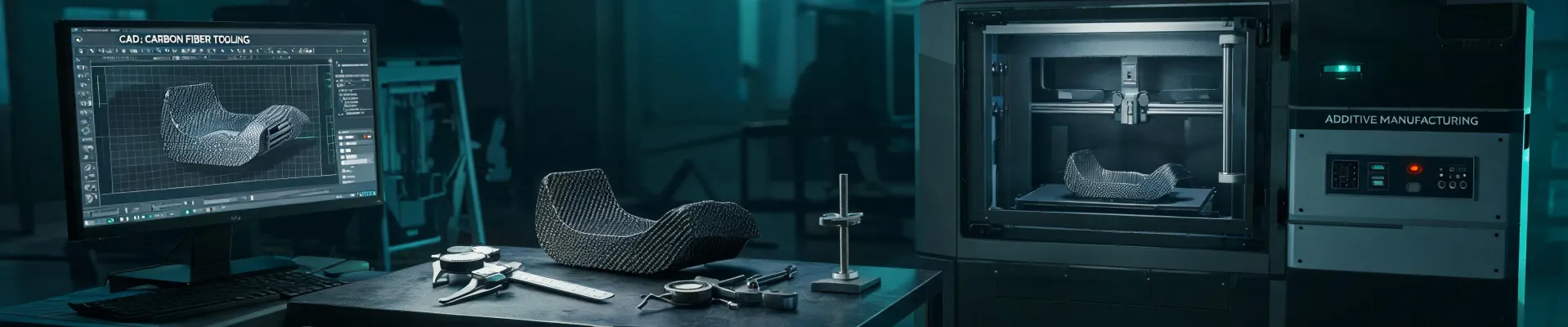
We also started asking questions we never used to ask. When someone suggested we look into whether 3D printers can print carbon fiber for our jigs and fixtures, my first question wasn't the machine price. It was: what's the total cost per part, including post-processing, compared to our current method? That conversation is still ongoing, but I'm tracking it in the same spreadsheet.
The Bottom Line
If you're buying CNC equipment — lathes, press brakes, mills, even tool storage — the sticker price is a starting point, not a decision. Add up what it costs to reach full productivity: training, tooling, the learning curve, and the throughput you're leaving on the table.
Six years of tracking every invoice, quote, and hidden fee taught me one thing I wish I'd known in 2019: the most affordable CNC machine isn't the one with the lowest price tag. It's the one that disappears into your workflow — where operators stop fighting the controls and start making parts.
That's the machine worth paying for.
Pricing figures in this article reflect quotes and invoices from March 2019 through January 2025. Actual equipment prices vary by vendor, configuration, and time of order — verify current pricing with your dealer before committing to a purchase.