There's No Single "Best" 3D Printing Technology — Here's How to Figure Out Which One You Actually Need
If you're looking for a definitive answer on whether Polyjet or SLS is "better," I'm going to disappoint you. After managing our company's additive manufacturing budget for the past 6 years—analyzing over $180,000 in cumulative spending across 8 different vendors—I've learned that the right choice depends entirely on what you're trying to make and how you plan to use it.
That's not a cop-out. It's the reality of advanced manufacturing. What works for a one-off visual prototype will fail miserably for a functional part that needs to withstand heat or stress. And vice versa.
Here's the framework I use when our engineering or marketing teams come to me asking for a recommendation. I've broken it into three common scenarios.
Scenario A: You Need High-Resolution Visual Prototypes or Presentation Models
This is where Polyjet shines. If your priority is surface finish, detail, and the ability to showcase multiple materials or colors in a single print, Polyjet is almost certainly your best bet.
I remember a project in Q2 2024 where our marketing team needed a highly detailed prototype of a new consumer product for a trade show. They wanted it to look like the final injection-molded part—smooth, with a matte finish and a transparent window embedded. Polyjet delivered that in about 5 days. The texture was so good that a booth visitor actually tried to pick it up thinking it was the production unit.
Key advantages for this use case:
- Extremely smooth surface finish (often no post-processing needed)
- Ability to print multiple materials and colors simultaneously
- High dimensional accuracy for small, intricate features
- Great for parts with overhangs and complex geometries without support marks
The catch? Polyjet parts are generally not as strong or durable as SLS parts. They can be brittle and may degrade over time, especially under UV exposure. If your prototype needs to survive a shipping test or repeated handling by multiple people, you might want to look elsewhere.
Scenario B: You Need Functional Prototypes or End-Use Parts with Mechanical Strength
This is SLS territory. When I say "functional," I mean parts that need to handle stress, heat, or repetitive use—not just sit on a shelf and look pretty.
In 2023, we needed small batches of custom nylon components for a machine we were testing. The parts had to withstand constant vibration and some impact. Initially, we considered FDM (which our team was familiar with), but the layer lines were a potential failure point. We also looked at Polyjet, but the material properties—especially the brittleness—were a dealbreaker.
We went with SLS (nylon 12), and it was the right call. The parts were durable, had good chemical resistance, and the sintered nylon gave us the toughness we needed. We've since used SLS for a range of functional parts, from jigs and fixtures to end-use brackets.
Key advantages for this use case:
- Excellent mechanical properties (strength, impact resistance, fatigue)
- Good heat and chemical resistance (especially with nylon-based materials)
- No support structures needed, allowing for complex geometries
- Parts are more durable and long-lasting than Polyjet
The catch? Surface finish is rougher than Polyjet—typical SLS parts have a grainy, matte texture. If appearance is critical, you'll need post-processing (tumbling, sanding, or coating). Lead times can also be longer due to the pre-processing and cooling steps.
The worst mistake I made? In 2022, I approved an SLS order for a part that only needed to be a visual mockup. The engineer assumed we needed strength because "it's a prototype." We paid for a lot of performance we didn't need, and the finish wasn't as good as Polyjet would have been. That was a $300 lesson in asking better questions upfront.
Scenario C: You Need Production-Scale Quantities or Very Large Parts
This is where both Polyjet and SLS might not be the best answer—or at least, not the only one. For larger parts or higher volumes, I always look at other processes first.
For large parts (say, anything over 12 inches in any dimension): Neither Polyjet nor SLS is particularly cost-effective. Build volumes are limited, and per-part cost increases dramatically with size. We've found that CNC machining or even FDM can be more economical for large, functional parts—assuming the material and tolerance requirements are met.
For small-to-medium production runs (50-500 parts): Polyjet and SLS can work, but you need to consider the total cost per part, not just the per-print cost. SLS is often more cost-effective for functional production parts due to its durability and the ability to nest many parts in a single build. Polyjet is better for high-detail runs where aesthetics are paramount.
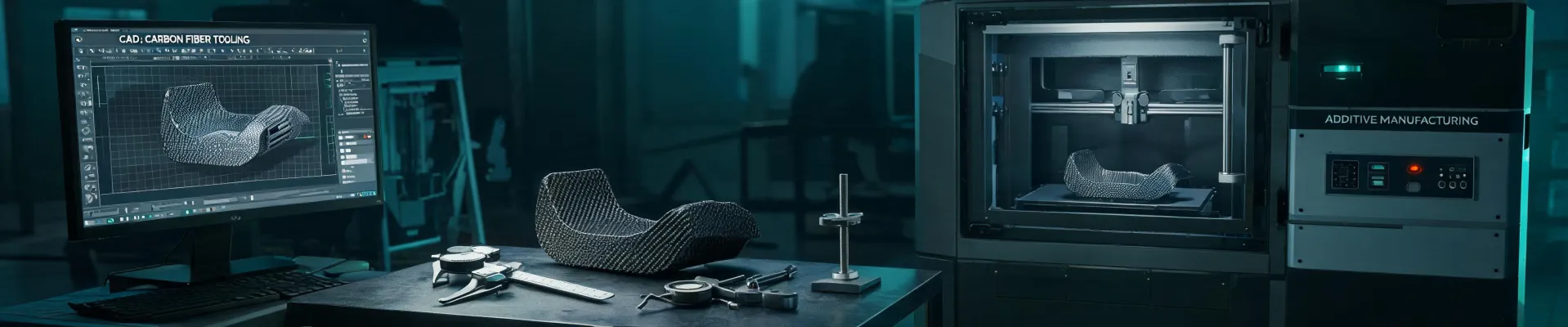
One more thing: if you're looking at very specific materials—like carbon fiber-reinforced nylon for structural parts—you might need to explore SLS with specialized materials or even look toward industrial FDM systems. At that point, the comparison shifts from "Polyjet vs SLS" to "which material best fits my application?"
How to Figure Out Which Scenario You're In
Here's the simple litmus test I use when our team comes to me with a new 3D printing request. Ask yourself these three questions:
- Is the primary requirement appearance or strength? If the part is for visual approval, customer presentation, or marketing—go Polyjet. If it needs to withstand real-world use—go SLS.
- How many parts do you need? For 1-10 parts, either process works, but your choice depends on the answer to question 1. For 10-100 parts, start thinking about total cost and lead time—SLS can be more efficient for nesting. For 100+, consider injection molding or other traditional processes.
- What's the material requirement? If you need specific mechanical properties (impact resistance, heat deflection, UV stability), check the material datasheets first. Polyjet materials are generally limited compared to the range of engineering-grade thermoplastics available for SLS (nylon 11, nylon 12, TPU, etc.).
I've also built a simple cost calculator after getting burned on hidden fees more than once. It includes line items for: base print cost, material cost, setup fees (if any), shipping, rush fees (if needed), and post-processing. The vendor who lists all fees upfront—even if the total looks higher—usually costs less in the end. In Q3 2024, I compared quotes for a $4,200 annual contract across 3 vendors. The one with the lowest per-part price ended up having a $450 "material surcharge" that the others included. That's an 11% difference hidden in fine print.
If you're still unsure, here's my rule of thumb: when in doubt, order a sample from each process. Most reputable vendors will print a small test part for a nominal fee. It's the best $50 you'll spend because you can compare finish, feel, and dimensional accuracy side by side. That's how we made our final decision in 2023, and it saved us from making a bad $2,000 order.