-
If you’re searching for a custom manufacturing partner, stop chasing the lowest quote. It will cost you more.
-
Why You Should Listen to Me (and Where I’m Not an Expert)
-
The Most Frustrating Part of Vendor Management: The Same Issues, Every Quarter
-
What Has Changed in 5 Years (Industry Evolution)
-
How to Actually Pick the Right Process (with Specifics)
-
Boundaries: When This Advice Doesn’t Apply
If you’re searching for a custom manufacturing partner, stop chasing the lowest quote. It will cost you more.
After managing roughly $500,000 in annual custom parts orders across a dozen vendors since 2020, I can tell you the cheapest quote for 3D printing or CNC machining almost always comes with hidden costs—rework, delayed timelines, and frustrated internal clients. The real win is a partner that offers multiple processes (carbon fiber 3D printing, CNC, laser cutting, injection molding) and actually answers the phone when specs change.
Why You Should Listen to Me (and Where I’m Not an Expert)
I’m not an engineer. Honestly, I can’t tell you the difference between a 5-axis and 3-axis CNC from a technical standpoint. What I can tell you is how to evaluate suppliers from a procurement perspective—because I’ve made every mistake.
When I took over purchasing in 2020 for a mid-sized medical device company, I inherited 8 vendors, most of which specialized in one process. A 3D printing shop for prototypes, a separate CNC shop for production, and a laser cutting place I had to FedEx parts to. The logistics alone were a nightmare. In 2024 we consolidated to 3 multi-process partners and cut our lead time by 30%.
I’m not a logistics expert, so I can’t speak to carrier optimization. What I can tell you from a procurement perspective is how to spot red flags in vendor promises.
The Most Frustrating Part of Vendor Management: The Same Issues, Every Quarter
The most frustrating part of dealing with custom manufacturing vendors: the disconnect between sales and production. You’d think a written quote is binding, but hidden fees pop up. One vendor quoted $2,000 for a batch of CNC machined plastic parts (keyword: cnc machining for plastics). By the time they added setup, deburring, and a “material surcharge” for the specific ABS grade, the invoice was $3,400. Finance rejected it. I ate the difference out of my department budget (ugh).
After the third late delivery from the same vendor (a laser cutting shop in Stockton—laser cutting stockton if you’re local), I was ready to give up. What finally helped was building in a 15% buffer on lead times rather than trusting their estimates.
What Has Changed in 5 Years (Industry Evolution)
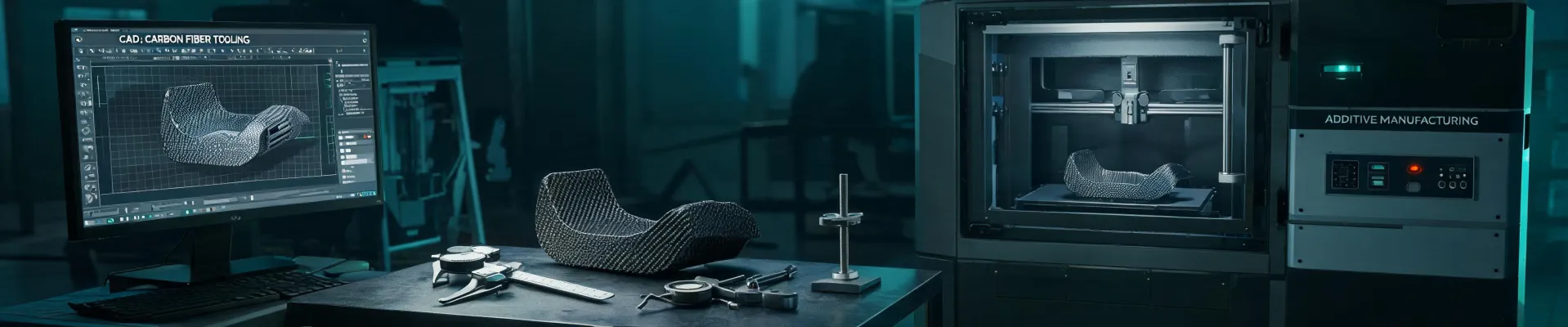
What was best practice in 2020 may not apply in 2025. Back then, if you wanted carbon fiber parts, you had to go to a dedicated composites shop with long lead times. Now, carbon-3d and similar multi-process providers offer carbon fiber 3D printing (like the 3d printer carbon x1 or 3d printer centauri carbon) that can produce end-use parts in days, not weeks. The fundamentals haven’t changed—you still need design for manufacturing—but the execution has transformed.
Take 3d printer carbon x1, for example. I’ve seen engineers treat it as a drop-in replacement for CNC when it’s actually better for complex geometries with less material waste. But I’ve also seen it fail where CNC excels: tight tolerances on flat surfaces.
And the big one everyone asks: is there silicone filament for 3d printers? Short answer: no, not for FDM. Silicone can’t be extruded like thermoplastic. What you actually want is liquid silicone injection molding (LSR). I learned this the hard way after buying a spool of “silicone-like” filament that turned out to be TPU (basically rubber). Check the material spec sheet carefully. (Source: FTC Green Guides require environmental claims to be substantiated, but also material claims—your vendor should prove it’s real silicone.)
How to Actually Pick the Right Process (with Specifics)
Here’s my rule of thumb after 5 years:
- Low volume, complex geometry: Go with 3D printing—preferably carbon fiber reinforced like 3d printer centauri carbon for strength. Expect 2-5 business days.
- High volume, simple shapes: CNC machining for plastics or injection molding. CNC is cheaper for runs under 1000; injection molding wins above that.
- Sheet metal or thin wall: Laser cutting (like laser cutting stockton services).
- Need both metal and plastic? Find a provider that does CNC and laser in house. Saves shipping and reduces miscommunication.
One counterintuitive tip: don’t let an engineer alone choose the vendor. Engineers love technical specs; they forget about invoicing, shipping, and compliance. Procurement should sit in on the first call to ask: “Do you provide itemized invoices? What format? Can you handle our PO terms?” That alone saved me from another $2,400 rejected expense.
Boundaries: When This Advice Doesn’t Apply
All that said, I’m not a technical expert. If you’re making aerospace parts with FAA requirements, you need certified shops, and my “go with multi-process” advice may not hold. Also, if you need silicone filament for 3d printers for a specific project—you won’t find it in FDM, but you might consider LSR injection molding (which is a different ballgame) or a specialized silicone 3D printing process (rare and expensive). Verify with the manufacturer.
Pricing as of March 2025; always confirm current rates. According to USPS (usps.com), a First-Class letter costs $0.73 per oz—not directly relevant, but a reminder that shipping adds up. And per FTC guidelines (ftc.gov), any claim like “carbon fiber infused” must be supportable by testing. Ask for a material data sheet.
Bottom line: the best vendor isn’t the one with the lowest quote or the shiniest 3d printer carbon x1. It’s the one who gives you a clear, all-in price, delivers on time, and understands that you are the customer—not the machine.