
-
When Every Hour Counts: A Practical Checklist
-
Step 1: Lock Down Your Specs (Before You Call Anyone)
-
Step 2: Match the Process to Your Timeline
-
Step 3: Make the First Call (And Ask the Right Questions)
-
Step 4: Set Up Your Risk Mitigation in Parallel
-
Step 5: Inspect Fast (And Have a Contingency)
-
Common Mistakes and What I'd Do Differently
When Every Hour Counts: A Practical Checklist
This checklist is for anyone who's ever needed a part yesterday—whether it's a production line down, a prototype for a client demo, or a last-minute fix before a trade show. If you have less than 72 hours to get a manufactured part in your hands, these five steps will cut through the noise.
I'm an engineer who's handled over 250 rush orders in 18 years, including a 36-hour turnaround for an automotive client who'd have lost a $50,000 contract otherwise. Here's the process I've refined.
Step 1: Lock Down Your Specs (Before You Call Anyone)
This is where most people waste time. They call a vendor with a vague idea—"I need a bracket, metal, ASAP." Three calls later, they realize they need three different quotes.
Here's what you need before dialing:
- Exact material. "Aluminum" isn't enough—6061-T6 and 7075 are different beasts in terms of machinability and lead time.
- Critical dimensions. Which tolerances are tight? ±0.1mm vs ±0.01mm can change whether a part needs CNC or can be 3D-printed.
- Quantity. One-off prototype? Ten for testing? The process changes. (Should mention: 3D printing is often faster for 1-5 units, CNC for 10+—but this shifts with complexity.)
- Finish requirements. As-printed? Sanded? Anodized? Each adds hours.
The question is: what can you compromise on? If the part needs to hold pressure, that's non-negotiable. If the surface finish just needs to look okay for a demo, you can save time by skipping post-processing.
Step 2: Match the Process to Your Timeline
Here's where the industry evolution comes in. Five years ago, if you needed a metal part in 48 hours, you were calling a local machine shop. Today, that's not always the right move.
The 'local is always faster' thinking comes from an era before modern logistics. I've had a part printed on the West Coast, shipped overnight, and beat a local shop that was quoting 10 days. The fundamentals haven't changed—speed is king—but the execution has transformed.
Here's a quick ballpark:
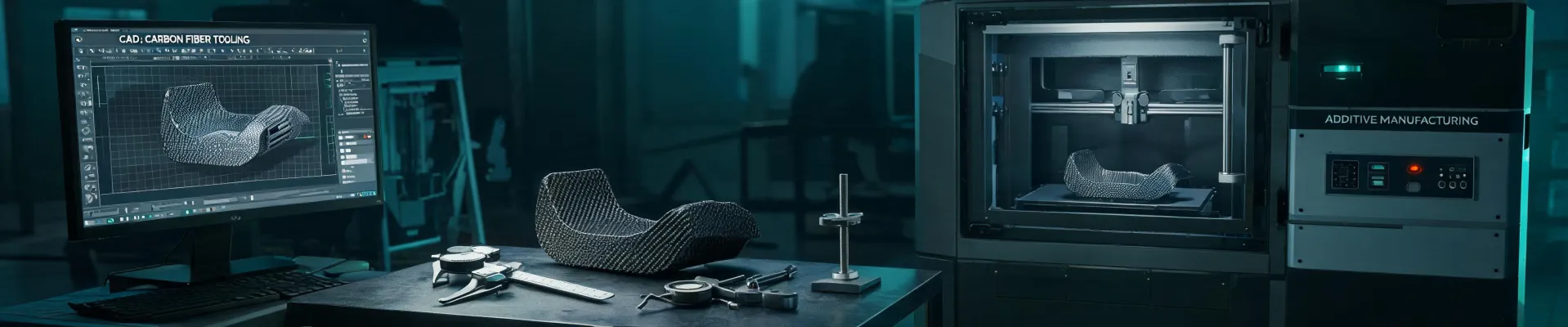
- Carbon fiber 3D printing: 24-72 hours for most parts, including turnaround.
- CNC machining: 48-96 hours for simple parts in common metals (6061, 304SS).
- Laser cutting: 24-48 hours for flat parts in sheet metal.
- Injection molding: Forget it under a week unless you already have the mold.
I should add: these timelines assume the vendor has material in stock. If they need to order it, add 2-5 days. That's why I keep a stash of common materials at home—6061 plate, some 1/4" acrylic, a few spools of CF-PA.
Why does this matter? Because calling the wrong vendor first costs 4-6 hours. And when you have 48 hours total, that's 12% of your budget gone on a phone call.
Step 3: Make the First Call (And Ask the Right Questions)
You've got your specs. Now, who do you call?
I've tested six different rush delivery options over the years. Here's what actually works: call a vendor who specializes in the process you need. Don't call a generalist and ask them to do carbon fiber 3D printing—they'll say yes, then outsource it, adding 24 hours.
When you call, ask these three things in order:
- "Can you start tonight?" Immediate start is non-negotiable. If they can't start within 4 hours, the timeline slips.
- "What's your rush capacity right now?" A shop with three machines running 24/7 is different from one with one machine and a backlog.
- "What's the single point of failure?" If they say "material," that's fine—you can source it. If they say "the operator," run.
The bottom line: you're trading money for time. Expect to pay 50-200% rush premium. I've paid $800 extra in rush fees to save a $12,000 project. It hurt, but the alternative was worse.
Step 4: Set Up Your Risk Mitigation in Parallel
This is the step most people skip, and it's the one that saves you. While the vendor is running your part, do two things:
- Order a backup from a second vendor. Yes, you'll pay for both. But if the first fails, you have a safety net. I've had to use this exactly twice in 200+ rush orders—but those two times paid for the policy ten times over.
- Prepare for receiving inspection. What are you checking when the part arrives? Have your calipers, go/no-go gauges, and a checklist ready. If it shows up at 4 PM and you need it by 8 AM, you don't have time to figure out how to measure it.
Our company lost a $15,000 contract in 2019 because we tried to save $400 on standard machining instead of rush. The part arrived late by 6 hours. The client's line was down. That's when we implemented our 'always have a backup vendor' policy.
Step 5: Inspect Fast (And Have a Contingency)
Part arrives. Now what?
Check the three things that matter most:
- Critical dimensions. Does it fit where it needs to fit? Measure now.
- Visual defects. Cracks, warping, surface damage. In a rush, you might accept cosmetic issues—but structural ones are deal-breakers.
- Material certification. For critical applications, verify the material is what you ordered. I've caught a 6061 part sent as 7075 once—they look identical but have different mechanical properties.
Even after choosing the vendor and paying the rush fee, I kept second-guessing. What if the part was wrong? The 36 hours until delivery were stressful. Didn't relax until I had the part in hand and it passed inspection.
If it doesn't pass, you have a problem. Your backup order from Step 4 is your safety. If you didn't order one? You're calling every shop in a 100-mile radius. I've done that. It's not fun.
Common Mistakes and What I'd Do Differently
After 200+ rush orders, here's what I see most people get wrong:
- Over-specifying. Asking for ±0.01mm tolerance on a part that needs ±0.1mm adds cost and eliminates process options. Be honest about what you need.
- Forgetting shipping. The part might be done in 24 hours, but if it's shipping ground and takes 5 days, you've lost. Overnight shipping is often worth the $50-100 extra.
- Not building a buffer. I religiously add 25% to any vendor's timeline. If they say 48 hours, I plan for 60. If it arrives earlier, great. If not, I'm not panicking.
One more thing: prices as of January 2025. I've seen rush fees range from $75 (small 3D-printed part, basic material) to $2,000+ (complex CNC part in 24 hours). Verify current rates with your vendor—they change.
This checklist won't make rush orders easy. But it makes them predictable. And in emergency manufacturing, predictability is worth more than speed.