Most people think a rush order is a deadline problem. I think it’s a process problem. I’ve spent the last six years coordinating custom manufacturing at carbon-3d, mostly for engineering teams and procurement managers whose schedules do not include a 30-day lead time. When a client calls and says “as soon as possible,” I don’t hear “please hurry.” I hear “find every assumption that will slow us down and kill it.” If you’ve ever sent a part file to a shop, waited three days for a quote, and then watched that quote ignore your tolerance callout, you already know why that matters.
So here is the opinion I hold after handling more than 200 rush jobs at carbon-3d: the best 3d printers for carbon fiber are not the point. The workflow around them is the point. A shop with average machines and excellent process will beat a shop with superb machines and chaotic process when the deadline matters. I’ll take that over a technology miracle every time.
I’m not saying equipment doesn’t matter. I’m saying efficiency is a competitive advantage. It lowers cost, cuts lead time, and turns a panicked phone call into a calm confirmation. If the workflow is missing, the newest continuous fiber machine just gives you a faster way to create confusion.
When I’m triaging a rush order, I ask three questions in this order: How many hours are left? Can the part physically be made in that window? What is the worst case if we miss? Most shops start at the machine and ask “can we?” too late. I start with the risk, because the correct process depends on what happens if the deadline is missed.
A Continuous Carbon Fiber 3D Printer Only Makes Ambiguity Faster
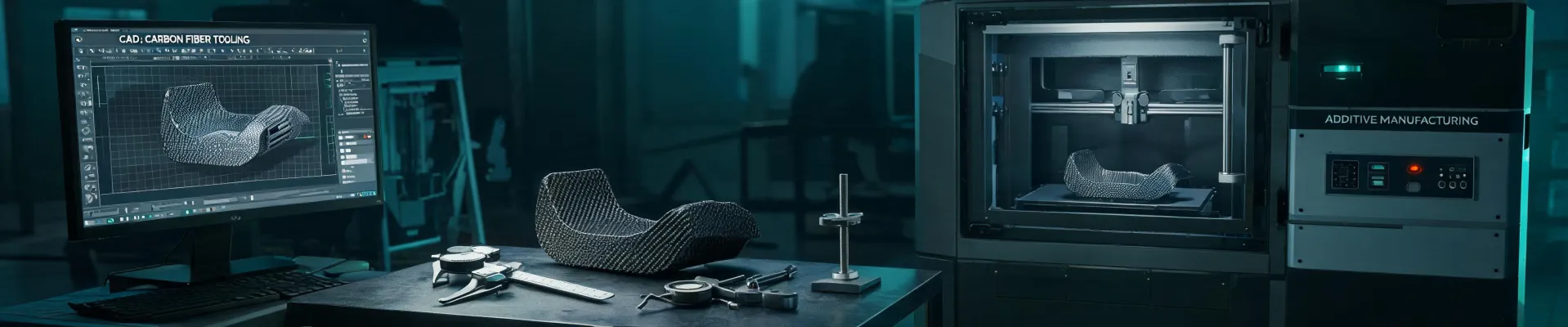
Let’s talk about the machine I get asked about most. A continuous carbon fiber 3d printer is not a magic black box. It is a way to lay down carbon fiber in a controlled path through a thermoplastic matrix, which gives you parts that behave more like metal than like a typical plastic print. For a bracket, a gripper jaw, or an end-of-arm tool, it is often the fastest route from CAD to a structural part.
But the process only works when the part is properly defined. I don’t need a 50-page document for every bracket, but I do need to know the loads, the fiber routing constraints, the attachment points, and the environment. I have lost hours to files with missing tolerances, reversed references, and materials selected by marketing name rather than data sheet.
Example: in March 2024, a customer called with a carbon-fiber arm that had cracked on an automated line. Normal lead time for a continuous-fiber production version was six business days. He needed it in less than three. The upside of accepting was seven days of uptime for his plant. The risk was that the first repair would fail in the same place because we had not inspected the fiber path. I kept asking myself: is seven days of uptime worth pushing this ahead of other orders? The expected value said yes, but the downside felt heavy.
We accepted the job with an extra inspection step at the critical transition. Even after confirming the schedule, I second-guessed the decision. What if a void was hiding in the continuous fiber path? The hours until first article came off the machine were stressful. It came out clean, the line started on time, and that customer has ordered from us three times since. The lesson: efficiency isn’t just moving faster. It’s choosing where to add checks, because they are cheapest before failure, not after.
CNC Machining Digital Caliper Checks Are the Real Rush Tool
People often ask how I handle CNC machining jobs that have to ship in 48 hours. They expect me to talk about high-feed milling, adaptive toolpaths, or five-axis speed. Those help, but honestly, the most underrated tool on a CNC job is a digital caliper. A CNC machining digital caliper record—checked at setup, after roughing, and at final—catches the errors that create emergency rework.
The most frustrating part of a missed deadline is not the spindle stopping. It’s the part that comes off the machine looking perfect, goes to finishing, and then shows up with one slot 0.004 inch too narrow. You’d think someone would have caught it before finishing. In a rush, inspection is the first step that gets sacrificed. I have done it myself, and I still kick myself for every hour of that avoidable overtime.
I’m not saying a caliper replaces a CMM. If you are cutting a complex 3D surface, a caliper won’t give you the whole truth. But for the other 80% of brackets, plates, bosses, and simple machine components, a digital caliper plus a written dimension report is the cheapest automation you can buy.
A Used Double Column VMC Is Not a Shortcut; It’s a Project
Efficiency also applies to capital equipment. I’m not anti-used machinery. In fact, a used double column VMC can be a great solution for a shop that needs large envelope capacity without the price of new iron. The keyword here is “solution.” Too often, it becomes a project.
Last year we looked at a used double column VMC at auction. The listing read “new controls, low hours, serviced.” The upside was $42,000 below the comparable new machine. The risk was that we would spend months commissioning a machine that could not hold tolerance on the large plates we wanted to run. I calculated the worst case: $15,000 in rigging, $6,000 in tooling, a missed customer commitment, and a four-week panic. Best case: a genuine bargain. The expected value said go ahead, but only if we verified it first.
So we sent in an independent inspector with a ballbar, a test indicator, and a calibration stub. The report found more axis backlash than the seller had mentioned, and we decided to pass. It stung for a day. Two months later, we bought a different used double column VMC with documented service history and a live test cut. That machine has run nearly every day since. The first machine was not a bad deal; it was a bad process.
A Paloma Question Taught Me What a Real Spec Looks Like
Here is a strange lesson from outside manufacturing. A friend texted me, “how much sugar in vmc paloma?” I laughed, because a Paloma is a cocktail and the “VMC” part did not make sense to him either. The answer depends on the size of the glass, the brand of grapefruit soda, the amount of lime, and the sweetener. One recipe might have 8 grams; another might have 20. If you just ask “how much sugar,” you force someone to make a guess.
That is exactly what happens when an RFQ says “make it in carbon fiber.” I don’t know if the customer means continuous fiber or chopped fiber, nylon or PEEK, printed or machined, black or UV-stable, one part or a thousand. The same phrase can mean a $50 prototype or a $15,000 tool. Precision is not bureaucracy. Precision is speed, because the fastest part is the one that does not need to be asked about again.
Let Me Answer the Obvious Objection
By now, someone will say I’m overselling process. “You make it sound like a checklist matters more than the machine.” Sometimes it does not. If I need a simple aluminum plate tomorrow afternoon, I’m not going to wait for a carbon fiber print. CNC machining from a standard billet is the correct answer. If I need 50,000 identical connectors, injection molding is likely the right process. This is not an argument against technology. It’s an argument for choosing the right tool at the right moment and building a workflow around it.
I also won’t claim that additive is always better than CNC. It isn’t. I’ve rejected 3d printing when parts needed tolerances below what a printed part can hold, when the heat load was too high, or when a customer needed a material that only comes in bar stock. Traditional machining is not “old.” It is often the most efficient path. My point is that efficiency comes from clear requirements and honest capacity decisions, not from owning one special process.
So if someone asks me for “best 3d printers for carbon fiber,” I’ll still talk about build volume, fiber toggles, and heated chambers. Those specifications are useful. But the part that determines success is the system around the machine: how you define the job, inspect the critical dimensions, handle the bad file, and decide when to say no. Buy the machine if you need it. Just don’t expect carbon fiber to fix a workflow that was already fragile.
At carbon-3d, we work with continuous carbon fiber 3d printing, CNC machining, laser processing, and injection molding depending on the project. I like those tools. What I really like is the moment when a client stops asking “when will it ship?” and starts asking “how many can you make?” That is what efficiency feels like. It is not a coincidence, and it is not a feature on a spec sheet. It is the result of treating the process as the machine.