
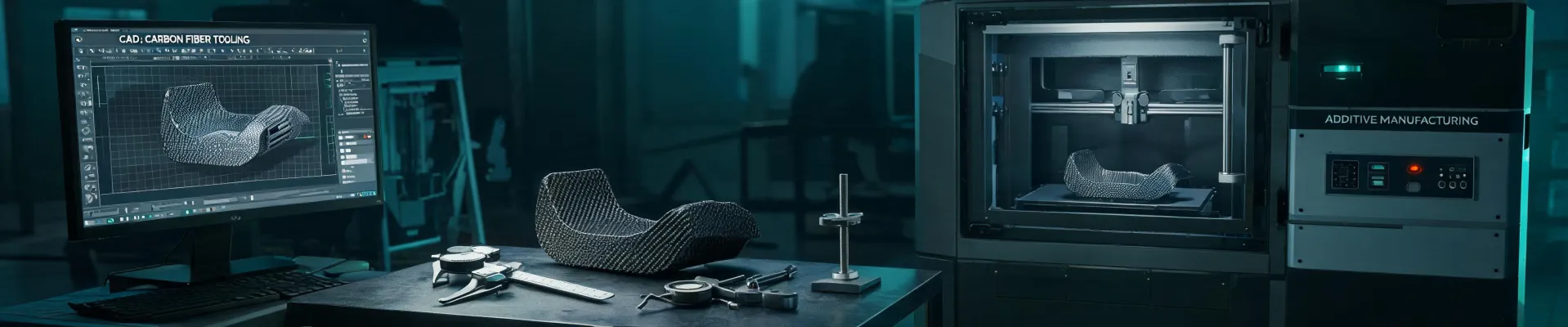
One Tuesday in March, our lead mechanical engineer walked into my office with a laptop open to a CAD model. 'We need 60 of these,' he said. 'Carbon fiber bracket. Brass threaded inserts. Can you source it?' I had been handling purchasing for a 70-person product development firm since 2020, but this was the first part that needed two different manufacturing processes at once. I knew enough to be dangerous, which is why I almost created a bigger problem before the actual order started.
The printer detour
At first, I treated it like a normal sourcing request. Then the questions started. Someone in the team Slack wrote 'x1 carbon 3d printer for sale' and said we should buy one for the office. Another person linked to an Elegoo Centauri Carbon FDM 3D printer with a note that it looked more affordable. I don't want to mock that idea. Both are legitimate machines, and the price of desktop 3D printing has dropped enough that any engineer will wonder why we don't do it ourselves.
But there is a difference between a printer for prototypes and a process for parts. We needed 60 bracket assemblies with threaded brass inserts, material documentation, and repeatable tolerances. That isn't the same as printing a bracket to see if it fits. The part also had to survive a customer validation cycle. A desktop printer might have made a good-looking version. Making 60 reproducible versions, with inserts that don't pull out, is a different problem.
The filament question made the detour even worse. One designer asked, 'what 3d printers use 2.85 mm filament?' He had found a discounted spool of carbon-fiber nylon and thought we could save money if we bought a machine that accepted that filament. I looked it up. The answer involved some desktop and professional models. But that research never answered the actual question: what material grade does the part need, and who can print it with a controlled process? We were trying to pick a filament before we had picked a manufacturing system. It would have been like buying tires for a car we hadn't chosen yet.
Sourcing the wrong way first
I did what most buyers would do. I typed 'cnc machining brass manufacturer' into the search bar. Then I tried 'cnc milling process suppliers.' I found plenty of shops that could make metal parts. The problem was that no single machine shop wanted to own the whole assembly. Some said they could machine the brass inserts, but they did not do carbon fiber 3D printing. Others said they could print the bracket, but the brass threads would need to be ordered separately.
That left me as the link between two suppliers. I would have to exchange CAD files, align delivery dates, and hope the parts matched. When a part is machined after the 3D printed bracket comes out of the printer, small differences in thermal expansion, thread position, and tolerances can create surprises. If something didn't fit, I would be the one chasing both vendors and explaining the delay to engineering. I have done that before. It isn't fun, and it usually ends with someone asking why I didn't find a supplier who took responsibility for the whole assembly.
Then carbon-3d came into the conversation. I reached out because they listed industrial carbon fiber 3D printing and CNC machining under the same roof. Their project engineer replied with questions I hadn't asked. What brass grade? What tolerance class? Do you need a first article? That response felt slightly uncomfortable because I had none of the answers. In hindsight, that discomfort was the signal that we had skipped an important planning step.
The word brass means different things
The CAD drawing simply said 'brass inserts.' I didn't know brass had so many grades. When I told the supplier to use standard brass, they quoted C36000. That is a common grade for machined brass, and a reasonable default for screw-machined parts. Our design engineer had assumed C26000 cartridge brass because the assembly could see high humidity. C26000 has different corrosion behavior than C36000. I said 'standard brass.' They heard 'use the standard machining grade.' Result: the first sample inserts were the right shape and the wrong material.
That was a communication failure, but it came from a process gap. We did not have a formal material approval step in our RFQ. There was no line on the drawing to confirm the exact material before ordering. The engineer and I both assumed the word brass was enough. It wasn't.
It cost us about a week and a rework on the first article. The supplier didn't charge for the replacement sample, but we lost time. If we had a simple checklist that said 'confirm the material grade before sending the PO,' this never would have happened. I created that checklist after the incident. I should have had it before.
The decision I kept going back and forth on
During the wait, I still struggled with the idea that we could avoid this entire process by buying a machine. For almost a week, I went back and forth between the desktop printer route and the outsourced route. On paper, buying a printer looked smart. It's a one-time cost, and future projects could use it without paying a supplier markup. Plus, mechanical engineers love having tools in-house.
My gut said the opposite. A printer in the office would need someone to maintain it, calibrate it, dry the filament, document the print settings, and validate the parts. That person would probably be me, because I manage the office. I am not qualified to become a 3D printing technician overnight. The engineers are qualified, but their billable time is more expensive than a supplier's setup charge. The comparison stopped being printer cost versus supplier cost. It became total system cost, which included failed prints, training, and the risk of another engineer walking into my office asking when their part would be ready.
What actually worked
We accepted carbon-3d's quote for the full 60-piece assembly. They printed the carbon fiber bracket and machined the brass inserts, then reviewed a first article before running the batch. As of our February 2025 quote, the price was reasonable. More importantly, the lead time was certain. I knew when the parts would arrive, and they arrived on that day.
The real test was the inspection report. It matched the drawing, the insert threads passed, and the bracket surfaces looked consistent. I did not have to reconcile two separate deliveries or two different quality formats. It was one vendor, one PO, one accountable team.
To be clear, this isn't an argument that every part should be outsourced. Desktop 3D printing has a place. For early concept models or internal jigs, an in-house printer can be faster and cheaper. And there are times when CNC machining is the better choice and carbon fiber 3D printing is the wrong process. The lesson isn't about the technology being superior. It is about matching the right process to the project and making sure one party owns the result.
Lessons I still use today
Whenever a custom part comes across my desk now, I ask the same questions before searching for a printer, filament, or supplier.
- What is the exact material grade? Not just brass, but C26000, C36000, 6061-T6, or whatever the drawing requires.
- Which feature controls the function of the part? In our case, it was the brass insert threads and their position after the 3D printed bracket cooled.
- Who approves the first article? The engineer, not the buyer.
- If the assembly uses more than one process, who owns the fit between them?
- Are we solving a part problem or a tooling problem? If we need 60 validated assemblies, that is a part problem. If we need one rough prototype, a printer may be the answer.
Searching 'what 3d printers use 2.85 mm filament' taught me something, but it did not help this order. Looking at the X1 Carbon 3D printer for sale was interesting. The Elegoo Centauri Carbon FDM 3D printer also looked like a capable machine. None of those options solved our problem, because the problem wasn't a lack of printer capacity. It was a lack of manufacturing coordination.
Now I still watch printer announcements and price changes. The technology is improving, and maybe someday our office will buy one for internal work. But when that day comes, I'll set up the same material and process review we now use for outside suppliers. The machine will be a tool, not a shortcut.
That bracket order taught me a simpler lesson too. I don't get paid for buying machines. I get paid for getting the right parts to the right person without surprises. As of that February 2025 quote, carbon-3d gave me the certainty I needed. That certainty was worth more than the cost difference between the cheapest supplier and the most communicative one. It still is.